Saturday, April 26, 2008

3 On Your Side: Home Buying Downpayment Dilemma

Jim Donovan
PHILADELPHIA (CBS 3) ― Struggling homeowners aren't getting the help they need! That's according to a new report which finds 70 percent of delinquent sub-prime borrowers are still in trouble. About 300,000 homeowners are in some stage of foreclosure, that's up 8 percent since October.

The mortgage mess is affecting home buyers too! Even though house prices have been falling, banks just aren't giving money away like they used to, especially to first time borrowers. Long-time renter Renee Forzano had her heart set on buying a condo, but she now realizes that all the fees and financing means that dream needs to be placed on hold. "After talking to the mortgage broker it was going to be almost double what i pay in rent to actually own it," says Forzano.

Dropping prices are motivating many first time home buyers, ready to capitalize on cost savings. But stricter lending standards are leaving some to rethink whether the time is right. According to Stacey Bradford of Smart Money Magazine.

"We're seeing a lot of people are finding that you need to put down a much larger down payment and have a very strong credit score."

Many buyers now have to shell out a down payment of 10 to 20 percent, when in the past there were five-percent or even no-money down loans available.

"20 percent is ideal. Anything less than that you have to start paying pmi, or private mortgage insurance, and that's actually a fee you are going to have to pay in addition to your interest rate on your mortgage," says Bradford.

So what should be the deciding factor for first time buyers on the fence about purchasing a home? You need to seriously consider how long you'll be living in that home. Experts say it needs to be a minimum 3 to 5 years or even longer to ride out this crisis in the housing and mortgage industry.

(© MMVIII, CBS Broadcasting Inc. All Rights Reserved.)

What a Home Inspection Includes


Typically, home inspectors will spend a couple of hours going over the home and then write up a report detailing any mechanical, structural, or safety problems they’ve found. It’s important to note that an inspection is not an appraisal, municipal code inspection, or warranty. Since you’re a prudent buyer and will make your offer subject to a professional inspection, a bad report can give you reason to cancel the sale and get your earnest money deposit back. Or you can use the report to get the seller to renegotiate the offer and correct any problems. A typical example is Alan and Sandra, who found a 12-year-old home in an upscale neighborhood that was exactly what they were looking for. They felt so lucky to find the home that they didn’t want to jeopardize their offer by making it subject to an inspection. However, their agent insisted on the contingency, stressing that a few hundred dollars is cheap insurance when you’re investing more than $350,000.
A few days later, the inspector met the buyers’ agent at the home.
What should have been a routine inspection turned up major problems. The house had been damaged in a fire about eight years before and the repairs were less than professional. Several joists in the attic were charred and should have been replaced. Likewise, many damaged wall studs had been covered over with sheetrock. For the buyers, it was a disappointment to lose the house, but a relief that they had not made a costly mistake.
In another example, Scott and Marissa’s inspection report came back with several small but serious problems, such as an improperly installed furnace flue, no flex connector or strapping to secure the water heater, and no vents in the door to the furnace room. In this case, the seller agreed to pay a heating contractor to correct the problems before closing. Typically, most problems are handled this way because the sellers realize they have to take care of them or the house won’t sell. Once problems have been disclosed and documented, sellers can’t claim they didn’t know on future disclosure forms without leaving themselves open to liability.
Homesellers who may be tempted to hide problems are finding out that with home inspections and disclosure laws, selling as-is or with nondisclosure is going the way of snake oil cures.
However, keep in mind that home inspections are still a largely unregulated industry. So use caution if the listing agent or seller insists on a particular inspector. It’s important for you to choose your own inspector. Check the Yellow Pages for a list of inspectors in your area. If the inspector is a member of the American Society of Home Inspectors (ASHI) or the National Institute of Building Inspectors (NIBI), that’s a plus.
Also, if you’re unsure of the appliances, electrical, plumbing, or heating systems, you can write in the offer that the seller will furnish a home warranty policy. This policy insures these systems for one year after closing and usually costs $300–$500. Look in the Yellow Pages under home warranties for insurers in your area. As a final caution, it’s a good idea to schedule a walk-through inspection a day before closing. This is to make sure the condition has not changed, there’s no packing and moving damage, and no one has forgotten what stays and what goes. You don’t want to move in and find that the sellers removed the antique chandelier in the dining room you specifically included in the sale.

Seven reasons why you should get a professional home inspection?

  1. There’s nothing worse than finding surprises after you move in. Problems the sellers didn’t know existed can surface, costing you big bucks.
  2. It’s important to protect yourself from problems the sellers didn’t disclose or forgot to tell you about.
  3. Many times you can renegotiate the price if problems are found that would cost you money down the road.
  4. If problems are found, you’ll know how much it’ll cost to fix them. If you go ahead with the sale, it’ll be an informed decision.
  5. Sellers will often correct any problems so they don’t lose the sale. But you’ll probably need a professional inspection listing the repairs before sellers will spend money to do the work.
  6. Even though your Uncle Louie or Cousin Joe is a contractor, architect, or veteran homeowner, they’re not professional home inspectors. They’re not trained for it. It’s far better to hire a professional inspector and not put relatives or friends on the spot trying to pretend they know as much as a trained inspector.
  7. Buying a home is a big, multihundred thousand dollar, 30-year investment. Why jeopardize both your investment and peace of mind for less than two weeks’ interest payment?

Tuesday, April 22, 2008

Rightmove: Home buying an 'emotional' process

The choice of a property in the present turbulent market is an "emotional" process, according to RightMove.co.uk.

While traditional factors, such as proximity to amenities, security and education remain important, buyers can become "emotionally attached to a property" in today's market.

"While there are basic rules about house buying, emotion comes into it an awful lot when people are emotionally attached to a property and it creates a good impression on them when they go and look at it," said Miles Shipman, commercial director at RightMove.

The remarks are supported by the findings of a Nationwide survey, published in April 2007, which shows 97 per cent of people thought that a location in a pleasant neighbourhood was important.

A good school catchment area was rated important for 41 per cent of people and 65 per cent thought the likelihood of future house price rises was an important factor when buying a house.

"The proximity to key locations, which might be school or workplace, tends to be the main driver," continued Mr Shipside.

"Having decided on the area - and therefore the radius that you can live in from those key amenities - people will obviously look at the style of properties in that area, features and security."

Yorkshire Bank’s house buyers survey, published in March 2008, shows 74 per cent of people value a neighbourhood watch scheme and 54 per cent of first-time buyers would pay more for a property that has in an area that has a 'strong sense of community'.

"Properties hit different hotspots for different reasons or sometimes people don’t really work out what they want until they’ve viewed a lot of properties," explained Mr Shipside.

"There are certain basic criteria in terms of price, location, transport and travelling distances to local amenities that are particularly important."

Home Inspections: Don’t Buy Without One

Even though most states require sellers to disclose problems in writing to a buyer, it’s still buyer beware. A seller may fill out a multipage seller’s disclosure form, but at the time there’s no way to tell if it’s accurate. In reality, a disclosure boils down to the seller’s opinion on the condition of the house and its components. So, it’s best to use the disclosure form as a starting point and not assume that it’s totally accurate.

Sometimes buyers hesitate to spend money on an inspection, having heard that homeowners must bring a home up to code before they can sell, that if the electrical or plumbing is not up to code it must be fixed before a home can close. In reality, this can be classified as an urban legend. Generally, sellers are not required to be code compliant when they sell unless it’s required in an offer. There’s no rule or law that states who has to pay to bring a property up to code. So if you buy a home, problems develop later on, and you had nothing in writing, you’re stuck with the bill.

One buyer who learned the hard way was a handyman type who felt he didn’t need an inspection on a home he made an offer on. Since the home was only five years old, he reasoned that not that much could be wrong. Besides, he knew a lot about building, he had walked through the home twice, and everything looked fine. The sale closed, and a few days later the buyer started moving in . . . to a big surprise. In the bath off the master bedroom, there was no water because the plumbing was not hooked up. The fixtures were all in place, but no water or waste lines. The buyer had looked in, saw the fixtures, and assumed it was a working bathroom. Would an inspector have caught that chicanery? In a heartbeat!

The best way to protect yourself from surprises is to hire a professional home inspector. It’ll cost you $250 to $475, but it goes a long way toward reducing the risk of buying an existing home. Even if you’re a building professional, you can’t think of everything in a walk through.

Four Things to Look for When You Buy a Policy


Different regions require different emphasis on what is covered. In the Sunbelt, for example, air-conditioning and pool coverage are important, but in the Northeast, furnaces and sprinkling systems are a primary concern. Regardless of the area you live in, the important things to look for in choosing a policy are:
  1. Make sure the insurer is financially sound and has a good track record. The best policy is worthless if the company goes bankrupt. Look for companies tied in with substantial national corporations that usually advertise in your local Yellow Pages. Check with a real estate broker or two for companies they have had good experiences with. Also, it doesn’t hurt to verify customer references or check financial filings at the department of real estate or insurance.
  2. Read the policy through and make sure you understand what is and is not covered as well as what the company charges for the service fee. On the average, most service fees run in the $35–$50 range. But remember, it’s a matter of trade-offs, and the lowest service fee is not always the best deal.
  3. Look carefully at the ‘‘preexisting conditions’’ part of the policy. Does the insurer require a presale home inspection before the policy becomes effective, and is there a time period before certain items are covered after you move in?
  4. Make sure the optional coverage you want such as on a swimming pool, air conditioning, or refrigerator is included. If a seller is furnishing only a bare bones policy, you may need to pay the extra cost for the options you want. It’s a good idea to read over the policy before closing, not when you’re moving in and the air conditioner dies on the hottest day of the year. That’s a bad time to find out that the seller gave you only a basic policy.
Interestingly, a recent National Home Warranty Association survey of the California market found that 56 percent of the sellers bought policies to avoid potential lawsuits, complaints, and disclosure problems arising from the sale.

Friday, April 18, 2008

Value, not price, key factor when looking to buy home

Forget the numbers and focus first on what type of lifestyle you want
Today, buying a home may feel a lot like buying stocks: You'd prefer to wait until the market finally bottoms out.

The only problem is getting the timing right.

The price of existing single-family homes in 20 major metro areas has declined every month since September, according to the Standard & Poor's/Case-Shiller home price index. Nationally, home prices were down 8.9 percent last year.

That would seem to argue in favor of a wait-and-see strategy. But even in a buyer's market, real estate is a case-specific transaction. In areas rife with foreclosures, prices may fall further, real estate agents say. Yet there are also some examples where homes are quickly snatched up for list price—or more.

The key is to not get so hung up on the list price, though it is important, but to recognize a good value when you see it. Here's how:

Start with what you want

To begin, forget the numbers and focus first on what type of lifestyle you want. Are good schools a priority? Do you want to be within steps of public transportation? Or is it more important to be near, say, parks?

In general, the more a community has to offer, from good schools to a vibrant night life, the more stable home prices have tended to be. For example, a recent study by Trulia.com, a real estate search engine, found that in Chicago neighborhoods with high-ranking elementary schools, the median price of homes increased from 2006 to 2007.

That bodes well when you need to resell. But as a buyer, you may not be able to negotiate steep price discounts or wait very long to make an offer, or risk losing out to others who recognize a good value.

Russ Murray, a buyer's agent in the suburbs of Denver, for example, said one client recently made a low offer on a foreclosed home in a "decent" neighborhood.

"It turned out we were No. 18 on a list for a home that had been on the market only a week," Murray said.

On the flip side, you likely will have greater bargaining power in communities where many homes are for sale or in areas where new developments are under construction.

"A few years ago, condo units were sold even before ground was broken," said David Hanna, president-elect of the Chicago Association of Realtors. "Now we're seeing people take their time to get into these projects. And developers are quick to cut their price and offer incentives."

Size up the market

You'll be a smarter buyer if you research not only a neighborhood's amenities but also the price of homes recently sold in the area. Find out: How long did those homes stay on the market? What was the sale price?

An agent, if you work with one, should be able to answer these questions. Don't settle for assurances that, "now is a good time to buy." Make sure to get specific examples of home sales, preferably within the last year or earlier.

If you're selling your home on your own, check for the sale prices of comparable homes within your neighborhood at sites such as Domania.com, Trulia.com and Homeprice.net. You also may receive comparables if you list your home on the multiple listing service, or MLS, using a flat-fee service.

Maximize Web resources

Although some homes in desirable neighborhoods may sell quickly, so many properties are for sale that you shouldn't necessarily rush to buy.

According to data from the National Association of Realtors, it would take 9.6 months to sell the total supply of pre-existing homes on the market.

Even more homes may be listed this spring, typically real estate's busiest season, so you may be able to take your time searching, starting first online at any number of industry-related sites, including Realtor.com, Zillow.com, Trulia.com and RealEstate.yahoo.com.

"There are so many tools out there that are available to buyers," said Jennifer Michaels, senior vice president of FSBO.com, a Web site that facilitates for-sale-by-owner transactions. "They have to do their research."

When you find a property that meets your needs and seems fairly priced, or has owners willing to negotiate, then make a move. Even if home prices ease a bit after you purchase, it will be little matter to you—you like where you live.

E-mail Carolyn Bigda at yourmoney@tribune.com.

Buying first home 'hardest ever' in Scotland

First-time buyers are finding it harder than ever to get on the property ladder despite a slowdown in the Scottish housing market, a charity has warned.

Research by Shelter Scotland showed that the average price of a first home had risen by 180% in the past 10 years.

It claimed that rising house prices meant buying a first home was now 65% more difficult than in 1997.

Shelter Scotland is to host a summit to examine the prospects for the Scottish housing market next month.

The homeless and housing charity said that, despite recent reports that the Scottish property market could face a downturn, buying a house for the first time was more unaffordable than ever.

Its Roof Affordability Index showed that while the average weekly income of working households had risen from £548 in 1997 to £851 now, the average first-time buyer property had risen from £38,845 10 years ago to £108,446 at present.

Archie Stoddart, director of Shelter Scotland, said: "Despite the column inches dedicated recently to a downturn in house prices south of the border, and a possible slowdown in Scotland, this long-term comparison shows the real story is that housing is out of the reach of many would-be buyers.

"Any fall in prices would be a drop in the ocean for those looking to buy in Scotland after an almost 180% rise in prices over the last 10 years.

"The stark reality for many first-time buyers is that as mortgage lenders tighten their belts in the current financial climate, it will become increasingly difficult to buy."

Mr Stoddard added it was important that buying was not the only option for those looking for their first home.

He said: "We cannot afford to put more people at risk of repossession from over-stretching themselves to get onto the property ladder.

"We must make sure that we provide for those who cannot buy by having a stock of good quality, affordable rented housing, both in the social and private sector."

What is Home Warranty?

The term home warranty is also used by new-home builders and remodeling contractors to insure the foundation and structure of their projects.
Unfortunately, the new-home warranty industry has had a lot of abuses and bad press. It has even has been the target of Congressional hearings. Many of these problems have come from builders ‘‘self-insuring’’ their warranties and homebuyers not insisting that everything be in writing. It’s important to realize that in the end a warranty is only as good as the company behind it. If the contractor goes belly-up, you’re left holding the bag. To prevent this, it’s a good idea to involve a third party insurer who backs up the builder’s warranty. One such company, Home Warranty Corporation, has provided new-home warranty protection for more than two decades.
For remodelers, the Home Owners Warranty (HOW) Remodelers Program offers a oneyear policy against faulty workmanship and materials, and from three to ten years’ coverage of major structural components. Under this coverage, you still deal with the contractor, but if there’s a problem, HOW is there to back up the warranty. When you’re dealing with a contractor or builder: (1) Make sure the warranty spells out clearly all the terms, conditions, and limits of your agreement. (2) Chisel in stone: If it isn’t in writing—it doesn’t exist! (3) Even if it costs you extra to have a third party guarantee the warranty, it’s usually worth it to you for peace of mind.

Confused Buyers and Irregular Regulations


Regulation of home warranties varies from state to state. In some states, the real estate commission is the regulator, but in others the department of insurance has jurisdiction. Also, the many different companies and policies have created confusion about what is and isn’t covered. As a result, many consumers have the misconception that a home warranty covers everything, down to a leaky faucet. In reality, the only way to find out what you’re getting is to read the policy over carefully and verify the company’s financial stability.

Home Warranties Can Save You Money


Buying a home does have some risk. You haven’t lived in the home, so you don’t know what works and what doesn’t, and the sellers may not be forthcoming about any problems. One tool that will help you minimize costly problems is a home warranty. For a one-time fee of $300–$500, you get a one-year insurance policy covering electrical, heating, and plumbing systems. Also included are built-in appliances such as dishwashers, disposals, compactors, and range/ovens. However, refrigerators, air conditioners, washers, and dryers usually are not included in the basic coverage of most policies but can be covered at additional cost.
With most programs, if you have a problem you call the warranty company, which sends a repair person from its own local network of contractors. Since the contractor usually has a service charge of $35– $50 for each call, it pays to handle the small or inexpensive repairs yourself.
The major benefit of a warranty is protection from problems you didn’t see during the inspection. But, it’s important to realize that most warranties don’t cover structural repairs such as a roof or foundation. There are, however, a growing number of companies that do offer—for a higher premium—coverage for structural and roofing work. Also, coverage of plumbing systems varies widely. Some policies cover all pipes—inside the home and out—but others don’t. You’ll need to read the fine print to find out what’s covered.
One of the most important policy restrictions to look for is ‘‘preexisting conditions.’’ Many warranty programs don’t cover problems that may have been present and detectable before the policy went into effect. The coverage varies widely, so it’s important to read and compare policies carefully before buying.

Short Sales Can Be a Good Way to Go


In a slow market, a home can drop in value below the mortgage balance—in mortgage-speak this is called upside down equity—and if the homeowner needs to sell, it can get ugly fast. One way to deal with this is a short sale. To get this option going, the homeowners need to contact the bank’s customer service department and see if they are willing to talk.
Next, you’ll need to write a purchase offer and include a prequalification letter from your lender ready to fax to the bank’s representative who is assigned to the case. It’ll go to a committee that will think it over and get back to you with an acceptance, counter, or rejection. Whether the sellers’ bank accepts the offer depends on the market, how many payments the sellers are behind, and if your deal is less than the costs of a foreclosure.
The bottom line is that you can sometimes get a good deal with a short sale, but you’ll usually need a lot of time and patience. Sometimes the sellers are cooperative because they want to save their credit. Other times they’ll give up part way through, and the deal will fizzle because the bank can’t deal with you as long as the sellers own the property.
But it’s an option to keep in mind if you run across a seller with upside down equity.

Saturday, April 5, 2008

Tips in Buying REOs

It costs in the neighborhood of $20,000 in attorney’s fees, administration, and carrying costs for a bank to foreclose on a property. In addition, if the home is damaged and needs work to make it saleable, the costs go up.
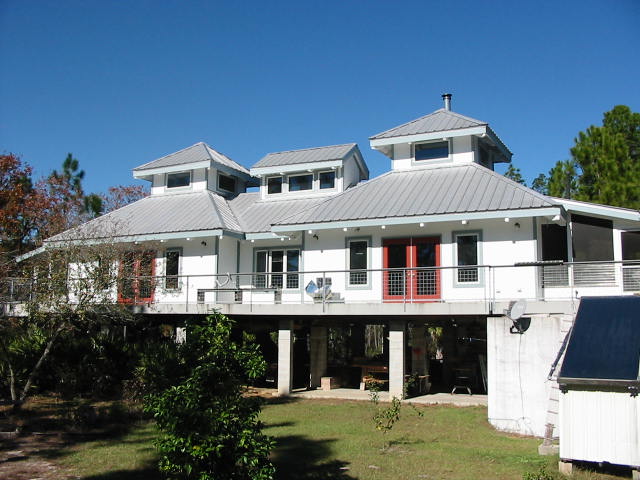
So, when you make a low offer on an REO, the bank will look at the costs it has incurred on this particular home. It will also consider the chances of getting a better deal in the near future. If the market is slow and this home has been on the books for a while, the chances are good you’ll get your deal. In other words, the right timing helps. But, there’s also a caveat here. If the home needs work, you’ll have to tread carefully. Many times buyers get these homes and find out that the costs of restoration can equal or exceed the savings they hoped to get on their good deal.

So, the first step in buying an REO is to go through the home carefully and make a list of needed repairs and what they will cost. Next, add the costs to the price you’re willing to pay for the home and compare with what similar homes have sold for in the area. This will guide you on what you should offer the bank. Hopefully, the REO committee will be in a good mood that day.

On the other hand, if the market is hot and homes are selling fast, you’ll get a cold shoulder to a low offer. Also, if there’s bidding on a property and you’re competing with several other buyers, the chances of getting a good deal drop considerably. There’s usually an uninformed bidder who gets carried away and bids too much. In this case, you’ll want to walk away and look elsewhere for a good deal. When Shawn and Marie were looking for homes, they found an REO in a neighborhood they liked that was close to an elementary school their daughter went to. In going through the house, they found it in bad condition. The lawn was dead, the carpets were beyond cleaning, the appliances needed to be replaced, and five doors had holes in them.

The first thing Shawn and Marie did was invest $350 for a profession inspection. They knew spending the money was a gamble, but they needed to find out exactly what it would cost to put the house in livable condition. After they got the inspection report back they shopped around for carpets, appliances, and materials and got bids for the work they couldn’t do themselves. Totaling all the costs, they came up with $13,578, including their inspection report. Getting together with their agent, the buyers pulled up on the MLS computer other similar properties that had sold recently.

They noticed that about $175,000 appeared to be the market value. Also, looking at similar homes currently for sale in the area confirmed that price range. Shawn felt that if they were going to all that trouble fixing up the home, they should get a good deal. Putting a sharp pencil to the figures, they decided to offer the bank $150,000 for the home. Their agent wrote up the offer and attached a copy of the bids and repair list they had put together, along with the inspection report and the buyers’ mortgage prequalified letter. The package was mailed to the bank’s REO representative who was handling the home. About five days later Shawn and Marie’s agent got a call from the REO department that it had accepted the offer.

The buyers had essentially gotten a home for about $10,000 under market in an area they wanted. Not a bad return on the work they would do to make the home their dream. The key to getting a bank REO committee to look at an offer is to include supporting data such as bids, cost lists, inspections, comparable sales, and a prequalification letter that shows the buyers are ready to go. Bankers like bird-in-the-hand offers, too.

Seven Ways to Protect Yourself During House Buying and Get Your Offer Accepted

Every state has its own real estate purchase agreements where you fill in the blanks. If you’re working with an agent, he or she will handle all the paperwork. If you don’t have one, you’ll probably need an attorney to ensure that the paperwork is filled out correctly and that you’re protected. It’s all too easy to get into a dispute with a seller over an earnest money deposit if the deal flounders.
  1. Make sure the offer is subject to you qualifying for the loan. Even though you’re approved by the bank, you still need this protection. In one case, a buyer didn’t want to write a loan approval contingency because he was approved for the loan and didn’t want to weaken his offer. But suddenly, a few days before closing, he lost his job when his company had to lay people off because it lost a major contract. The loan approval contingency his agent insisted on putting in saved him from losing his $1,000 earnest money deposit.
  2. Put in an addendum with a list of all items the sellers agree to include in the sale. Also, take digital photos of the items and create a print in album format (four to six images per page) and attach to the list. Every experienced agent has horror stories of sellers taking items on moving out that they shouldn’t have. Most common are appliances, light fixtures and chandeliers, air conditioners, ceiling fans, and window coverings. If you have an addendum—which the sellers must sign—with photos of the items, they are less likely to get loaded onto the mover’s truck.
  3. Make sure you get copies of all documents, including the addendums numbered 1/x, 2/x, etc. Getting a complete set of documents up front is the only way you can protect yourself from problems that can come up later on.
  4. What are the sellers’ hot buttons or problems? The more of these you can solve for them, the better your offer, and many times they don’t cost you anything. For example, if they need to close in three weeks or less and you can speed up your financing, you’ve strengthened your offer. On the flip side, the sellers may be 60 days from having their new home finished. You can do a delayed closing or a 30-day (or whatever works) rent back after closing, where the sellers pay rent equal to your monthly payment. The key is to make your offer as hard as possible for the sellers to counter. Sometimes the terms, timing, or moving schedule are more important than the offer price.
  5. Make your offer subject to a professional inspection. This is one of the more important contingencies. An inspection will cost you a few hundred dollars, but it can save you from making an expensive mistake. And if there are problems, you can use the inspection report to leverage a price reduction or repair concession.
  6. Make sure your agent presents the offer in person. If the property is vacant and the sellers are not in the area, a conference call between the seller and both agents will work. You absolutely don’t want your offer faxed to the listing agent. She can shop the offer by calling other buyers and agents who have recently shown the house, trying to top it. One step further on this is to write the offer to expire on presentation. You don’t want your offer sitting on the sellers’ kitchen table for a day or so while their agent shops for a better deal. No way do you want your offer to motivate other buyers looking at the house to write just a little better offer and knock you out of the deal.
  7. If you’re going in with an offer less than the maximum loan you qualify for on your prequalification letter, have the lender rewrite it for the offer amount. You don’t want the sellers to know that you qualify for $150,000 when you’re making a low offer for $135,000. In one instance, an inexperienced agent cost his clients several thousand dollars when he presented an offer on a home $7,500 under the asking price of $142,500. The listing agent asked see the buyers’ prequalification letter and immediately noticed the amount they qualified for was $150,000. The sellers, under pressure to sell, would have taken the low offer, but when they saw that the buyers qualified for much more, they increased their counter $4,000.

Combining Grants and Seller Concessions

Concessions can also be an important tool for getting into a home if you are down payment challenged, especially when there is a community grant/loan program.
Goran and Nada went this route when they wanted to buy a home but didn’t have much of a down payment. The community they lived in had a program that would pay up to $4,000 to help first-time homebuyers in targeted areas. If the buyers lived in the home for five years, the loan was forgiven.
The real estate market in the area Goran and Nada were interested in had a good supply of homes to choose from. They found one they liked and made an offer with the sellers paying $2,600 of the buyers’ closing costs, an offer the sellers eagerly accepted because their new home was just about completed. The possibility of having to make double house payments is usually a good seller motivator. With a $2,600 seller concession added to the $4,000 community grant, the buyers had $4,600 and needed only $720 of their own money to close.

Tuesday, April 1, 2008

How to Get the Sellers to Pay Concessions?

Even in a slow market, when you ask the seller to pay a hefty down payment and/or closing cost concessions to help you buy the house, you may have to go full price or over to make it work. The sellers may not have enough equity or may be unwilling to go the full amount you’ve asked.
For example, if a home is priced at $157,000 and you want the sellers to pay $3,500 of your closing costs as a concession, you may have to add all or part to your sales price. The worst case would be $160,500 ($157,000_$3,500), and that opens the question of whether the home will appraise for that amount. A common response is that the seller will ask you to split the difference—up the price $1,750 and they’ll go down $1,750.
Another common situation is that the sellers don’t have any equity in the home and have no room to maneuver because the home is priced where they walk away with zero. Then you have to decide if the house is worth upping the price and if it will appraise. In these cases, you’ll need to rely on your agent’s experience and knowledge of the market to guide you.
In the end, determining what to offer is more art form than particle physics. Sellers often don’t even know what they’ll accept until a signed offer is on the table in front of them. Sometimes they’ll take offers they should counter and other times reject offers they should grab. It all comes down to the ebb and flow of the seller’s state of mind and what’s happening in their life at the time of the offer. In one particular situation, the sellers rejected an offer that was $3,500 lower than the listed price. However, the next day the sellers found out that an offer they made on a home in another state had been accepted. That changed everything. Money suddenly took a back seat to getting out of town as fast as possible. The sellers called their agent back and told him they had changed their minds and asked if he could retrieve the offer. They were now willing to sign!
In most cases, you can tip the scales in your favor by giving the sellers a bird-in-the-hand feeling with a prequalified letter and doing your homework before writing an offer. But, in the end, it’s best to stay flexible. You seldom know what motivating factors are at work or when they may change.

Sellers Beings Are Emotional, Too

Important and too often overlooked is the emotional connection. Sellers sell on emotion, just as buyers buy on emotion. So meet the sellers if possible when you go through a second time. Don’t gush and tell them they have the loveliest home in the world . . . that you can’t live without it. You don’t want to come across as too eager and compromise your offer. You just want them to see you as real people—as someone they would like to see live in their home and take care of it the way they did.
In a hot market where you’ve got competing offers, you might write a letter to the sellers and attach it to the offer. Ryan and Susan did this when they presented an offer on an upscale home in a neighborhood where few listings come on the market. There were three competing offers, and their agent wasn’t optimistic about their chances.
Susan decided to write a letter to the buyer expressing how they felt about the home and neighborhood. The feeling was that they had nothing to lose, so why not give it try. The two-page letter explained how they wanted their twin girls to go the nearby elementary and how much they liked the home and the effort the sellers had put into decorating and maintaining the home. Their agent thought this was a little weird, but then orders are orders, and he clipped it to the offer paperwork.
That evening Susan and Ryan’s agent presented the offer to the Allbrights and their listing agent. It was the fourth offer and pretty much the same as the other three in price and terms. When the sellers read the attached letter, they looked each other and didn’t say anything for a few moments. Then Mrs. Allbright looked over at their agent and told her, ‘‘These are the people we want to live in our home . . . this is the offer we’re accepting.’’ The sellers were schoolteachers, and they identified with the buyers through their letter and felt they were the right people for their home.
This approach may not work all the time, but it’s important to note that making a connection with the sellers on a personal level can’t hurt. Agents too often get caught up in the nuts and bolts of real estate and forget that it’s the human touch that frequently makes deals.

What to Do When a House You Want Is Overpriced?

To some homeowners, their house becomes an extension of their egos. They overprice their home, reasoning that if the Adams home down the street sold for $180,000, then theirs must be worth at least $195,000, with all the neat decorating and wallpaper they’ve hung. How long it takes these homeowners to wake up to reality can depend on how much pressure there is to sell. If it’s a job transfer, it can be a couple of weeks. A good time gauge is the reason they’re selling. So, the first question you ask these sellers is why they would want to leave such a nice neighborhood and then listen carefully to their answer.
If this is a home you really want, there are a couple of things you can do.
First, you can keep an eye on the house, hoping the price will come down to what you think it’s worth. This, of course has its hazards—it might sell before that happens.
Second, you can make an offer for what you think the house is worth. If the sellers reject the offer or counter with a price you think is still high, you’re back to square one.
Joel and Penny had this problem when they wanted to buy a home near Penny’s mom, who needed help recovering from a hip replacement. They felt the home was overpriced for the neighborhood, based on comparable sales. The out-of-state owner priced the home based on what he wanted to get out of it and hadn’t gotten an appraisal. The seller rejected their first offer, so that put Joel and Penney back to the beginning; they didn’t know what to do next. They didn’t want to lose the house, but paying too much wasn’t an attractive option either. After talking over the situation with an appraiser, they decided to go back to the seller and offer the full price or appraisal, whichever was less.
With this approach, a neutral third party ends up setting the price. This allows the buyers to get the home at fair market value and gives the seller a way out without having to admit he may have priced the home too high.
Of course, the buyers have to know approximately what the home will appraise for so that they can get their financial ducks in a row before they make an offer. In Joel and Penny’s case, they had talked to an appraiser and knew about what the house would appraise for. To make a long story short, after a few phone calls back and forth, the seller accepted their offer, and the sale closed with both sides satisfied with the deal.
On the flip side, buyers can also be blinded to market values and lose the home they want, especially when friends or relatives say they can remember when that house sold for $50,000 and they wouldn’t pay a dime over $70,000 for it today. It’s best to ignore this kind of talk and go with the advice of real estate professionals who know the market.