Tuesday, December 29, 2009

Mistake _14. Not Getting a Professional Home Inspection


Steve and Tiffany were so excited to find the charming brick bungalow on a tree-lined street. It was in an area they had been looking at for several months and it had just come on the market that morning. Their enthusiasm was high as they went through the home, noting all the wood trim and spacious floor plan of a 1940s bungalow. It was exactly what they were looking for. A home where they could strip off the layers of paint and wallpaper and restore its former charm. Since Steve and Tiffany could come up with a 20 percent down payment, they opted to finance conventionally to avoid PMI costs. The deal closed three weeks later and two happy buyers moved in ready to start their renovation project.
It didn’t take long before the new homeowners discovered the problems. The gas company tagged the furnace because the service tech suspected it had a cracked chamber and the vent pipe was too near a wood joist. Other problems, typical of older homes that haven’t been upgraded, added up.
Unfortunately, the buyers had spent most of their money buying the home and didn’t have funds for the major problems they encountered. Interestingly, Steve and Tiffany felt that the bank’s appraiser would find any problems and list them on the appraisal. In reality, an appraiser is interested only in the overall value of the home as compared to others recently sold in the neighborhood. The appraiser’s job is to ensure the home is worth what the bank loans on it. So what should Steve and Tiffany have done differently? First, they should have hired a profession inspector. The inspection report would have outlined exactly what problems lurked under the rafters, joists, and in the dark spots of the basement. The buyers will know the condition of the appliances, furnace, water heater, and plumbing The buyers will have a list of problems and about how much it will cost to fix them. They’ll go into the sale with both eyes open and won’t have to max out their credit cards on unforeseen repairs.


Mistake _13. Not Getting a Buyer’s Broker Early On


A good buyer’s broker on your side is the best thing you can do to find the home you’re looking for and get the best deal. These agents know the market, the best neighborhoods, and what type of loan will best fit your situation. You’ll save a lot of wheel spinning if you get an agent in the beginning. The best part is that the fee is typically paid by the sellers, who are glad to pay it to get their home sold to a qualified buyer.
Max and Andrea were first-time homebuyers who had been looking for three months and were getting frustrated. Every weekend they circled ads, toured open houses, and called on for-sale signs. The bewildering array of choices only added to the confusion. Finally, one of Andrea’s coworkers suggested they talk to Carol, an agent she knew through her school’s PTA.
The first thing Carol did when she met with Max and Andrea was to ask them if they were working with a mortgage lender. When they said no, she told them that step number one in buying a home was to find out what you could afford. She then arranged for them to meet with a mortgage lender to get the process started. A couple of hours later, the lender called Carol and told her that Max and Andrea looked pretty good. There were a couple of small credit problems he had to clear up, but that shouldn’t be too difficult, and they could go up to about $150,000.
Meeting with the buyers again, Carol quickly determined what type of home, the number of bedrooms and amenities they wanted, along with areas within a reasonable commuting distance of work. The next step was entering the information into the multiple-listing database. Since this database is updated continuously, Carol limited the search to homes that had come on the market in the last two weeks. She knew that the best homes don’t last too long, so those are the ones you want to look for first. If the first list doesn’t produce a winner, the search is extended back to, say 30–60 days and so on. The longer a home has been on the market, the greater the chances are that it’s either overpriced or a dump where the buffalo roam. In the first search, Carol pulled up 14 homes that fit the buyers’ criteria, and the search was on. The first eight homes they looked at over the next two days were nice, but didn’t quite fit. On the third day of looking, however, the tenth home on the list turned out to be a winner. It was what the buyers were looking for. Max and Andrea quickly made an offer and Carol presented it to the sellers that evening. It was accepted with a closing scheduled in three weeks.
It’s true you can find a home on your own, but why spin your wheels and go through the hassle when you can have the services of a professional who will make sure you make the right moves? So, how do you find a good broker? Ask other people you know who have bought homes if they can recommend a good agent. Excellent sources are mortgage lenders and title people. They know who are bringing in the deals and how good a job they’re doing for their clients. Once you find a good realtor, it’s in your best interests to work with her on an exclusive basis. You may be asked to sign a Buyer’s Agency Agreement. If you specify that it can be canceled by either party, you’ll have a way out if you find you can’t work with that agent.

Mistake _12. Not Being Able to Make a Decision


When you’re searching for the right house, you should take your time and look at as many homes as you need to in order to get a good feel for the market. Once you’ve narrowed down your choices and decided on your dream home, then it’s time to move swiftly. Many first-time homebuyers lose a house or two they like before they realize that they have to move quickly. Indecision can cost them the home of their dreams.
Todd and Alex found this out when they were looking for their first home. After going through more than two dozen houses and not seeing anything that they liked, they were getting a little discouraged when their realtor called about a home that had just come on the market. When Todd and Alex drove by, it was the home they were looking for, an updated two-bedroom cottage with newly painted yellow siding, full basement, and a detached double car garage. It had been on the market less than a day. Their agent wanted them to put together an offer immediately, because he didn’t think it would be on the market long.
But, as much as they wanted the home, Todd and Alex hesitated. They were scared to make a commitment and wanted to wait until the weekend when their parents could go through it. Unfortunately for them, the weekend walk-through never happened. Another couple also loved the home, made an offer, and the ‘‘for sale’’ sign got a bright red diagonal ‘‘sold’’ sticker.
If you like the home, chances are other buyers will also. It’s not uncommon for a home to sit on the market for weeks with no action, and then suddenly two or three offers come in at the same time. Fear of making a mistake is usually the culprit. The best way to work through this is to talk it over with your broker, lender, or someone who has bought a house before. Once you get it out in the open, it becomes easier to deal with.
Buyer’s remorse is the industry term for this fear, and it applies to not only buying a house but also a new car, appliance, engagement ring, or whatever. Most homebuyers get it somewhere along the way. Knowing that’s it out there lurking and will probably strike when you least expect it should make it easier to deal with when it grabs you.

Tuesday, November 24, 2009

Mistake _11. Getting Family, Relatives, and Friends Too Involved


Not involving family or friends can sometimes be difficult. If mom and dad are putting up the down payment or cosigning on the mortgage, then they’ll be a big part of the deal. Otherwise, getting too many opinions can be worse than no opinions at all. Often, those whose opinions you seek will see your enthusiasm and support your decision, even if it’s a bad one. Or people who don’t know what they’re talking about will point out problems and bad mouth a good home.
Greg and Linda found this out when they bought their first home. Naturally, they were excited and wanted to get as many friends and relatives involved as they could. Unfortunately, it didn’t work out quite as they hoped. The more friends they took through the home, the more confused they got. Some friends loved it, others didn’t. One uncle even told them they were making a big mistake by moving into that neighborhood. After a week of getting bombarded by mixed messages, Greg and Linda developed such a bad case of buyer’s remorse that they called their agent and told him they were backing out. They couldn’t stand the pressure and would gladly forfeit their $500 deposit. So how do you avoid this situation?
First, rely on your agent, who is a professional and knows the areas and pitfalls.
Second, trust your own research. You’ve undoubtedly looked at a dozen or so homes in your price range, so you should have a pretty good idea of values and neighborhoods by the time you’re ready to make a decision.
Third, when you find a home you want to make an offer on, the last thing you want to do is involve Uncle Louie or Cousin Joe, who happens to be a contractor. Now matter how good they are, builders or contractors are not professional home inspectors. They may be skilled in their particular trade, but they’re not trained to find the potential problems a professional home inspector is. Don’t make the mistake of trying to save a few hundred dollars by short cutting the inspection process. Having anyone other than a professional inspect the house and give you a written report can come back to haunt you. Going back to the seller with a written report from a pro that the roof needs to be replaced carries some weight. Going back and telling the sellers that Uncle Louie says you have a bad roof doesn’t quite cut it.
The bottom line is to go with the advice of your buyer’s agent and home inspector; they’re the pros who can help you the most. If you want to involve family, relatives, and friends, have a barbecue at your new house after they help you move in.

Mistake 10. Not Protecting Yourself When You Make an Offer


Many homebuyers, in the excitement of finding their dream home and writing up an offer, forget to add contingencies that will protect them. A contingency is a clause that is added to an offer to make it subject to a certain event. Common contingencies are financing approval, house inspection, closing on a certain date, and replacing a roof. It’s true that some contingencies will weaken your offer, such as selling your house first or adding a list of repairs. But there are others that you need to add to protect yourself.
For instance, one buyer’s agent insisted on putting in a ‘‘subject to final loan approval contingency’’ in her client’s offer, even though he was approved for a mortgage. Unfortunately, two days before closing, the buyer was laid off his job due to downsizing, eliminating any chance of final loan approval. His agent saved him from losing a $1,000 deposit.
The most critical clauses you should consider adding are:
Always make your offer subject to a professional inspection. If you find problems, then you have some leverage to fix them or walk away and get your deposit back.
Making your offer subject to final loan approval will protect you from something unforeseen. For instance, should you get laid off during the loan process, you’ll lose the chance to buy the house but not your deposit.
If you’ve made an offer on a new home and your old home hasn’t closed yet, add a clause making it subject to closing the old house and funding.
You want the offer subject to the home appraising for at least the sales price. If the appraisal comes in low, you’ll have the option of negotiating the lower price or walking away. Along with final loan approval, inspection contingencies are the most important protection for a homebuyer. In one particular case, a home inspector found a cracked combustion chamber in the gas furnace. This can allow carbon monoxide to escape into the house with lethal consequences. The sellers quickly had the furnace replaced and the deal closed. Luckily, a potentially serious accident was avoided. In another case, an inspector found problems with the wiring. It was not only old, but the owner had tried to cut costs and do some rewiring himself. The wiring was not only not up to code but was dangerous, with illegal splices and unconnected hot wires in the attic. In this case the buyers simply negated the offer and got their deposit back because it was subject to a satisfactory inspection.

Tuesday, October 27, 2009

Mistake _9. Overextending Your Budget


A lender who pre-qualified you for a loan may tell you that you’re able to buy a $150,000 house. But keep in mind that buying for the full amount you can qualify for may put you out of your comfort zone. It’s not uncommon for homebuyers to purchase the max they’re qualified for and not have the cash flow to decorate or put in the yard for a few years. Some homeowners can handle this, while others are frustrated by having no furniture or a dirt yard. For most people it works out better to go for a smaller house and be able to put in a yard or redecorate.
Now that qualifying ratios are more credit driven than in the past, lenders are approving debt ratios as high as 65 percent. That means that your house payment and all other debts equal 65 percent of your income. Some families can handle that kind of debt load, while others would go bankrupt fast. It’s up to you to look at your lifestyle and realistically determine what you can handle. However, there’s another way to look at the amount of home you can buy.
Some people claim you should buy the most home you possibly can now. As your income goes up and home values rise, you win. You not only save a move but end up with more equity and a home you’ll enjoy more.
This approach worked for many owners who bought in the last 30 years and have watched their homes’ value soar dramatically. Many of these homeowners say they struggled in the beginning, but as their incomes went up, the house payments took a smaller part of their paycheck.
Fred and Rhonda were among those homeowners who bought their home in 1979 for $32,000 and recently sold it $196,000. According to Fred, their house payment in the beginning took nearly a third of his income. By the time they sold it, it was nearly paid off and took less than 10 percent of his paycheck.
Neither way is right or wrong. It just depends on your values and priorities.

Mistake _8. Buying a Property That’s Hard to Sell


This is one the biggest mistakes homebuyers make. It happens so often that you wonder what buyers are thinking when they sign the purchase agreement. The most common reason given by these homebuyers for why they bought a certain property is that it was such a good deal. It was the biggest house they could find for the price.
Typical hard-to-sell properties are:
  • Homes that back up to railroad tracks, freeways, industrial areas, frontage roads, etc.
  • Homes that have been overimproved for the area. A typical example would be a 900-square-foot bungalow with an addition on the back or side. Sometimes it’s a well-planned addition that blends in; other times it’s a tacky add-on. Neighborhoods that have become run down with a high percentage of rentals or foreclosed properties.
  • Homes that stray too far from the architectural mainstream of what people are buying. Typical examples are round homes, earth-covered homes, and conversions from other buildings, such as barns, silos, and sheds. They can be quaint and even be featured in a home magazine, but selling and getting back the money invested in them is not always easy. Properties that have lot or landscaping problems. Examples are a steep slope for a backyard or a gully; little or no backyard; or no privacy from neighbors. The way a house sits on a lot can also affect value. And of course the most common problem is exterior and interior colors that don’t complement or fit the house. You may love bright blue, but if you paint your house that color, you’ve just reduced its value considerably.
One instance of a homeowner making a property impossible to sell involved a buyer who spent $30,000 adding on to a small (800-square-foot) 40-year-old house. It was done professionally and did blend in. Still, the end result was an older house with an add-on. In this case, the most it would add to the house’s value was around $10,000. Unfortunately, the owners had taken out a second mortgage to do the addition, and now they couldn’t sell the home for anywhere near what they owed.
For them the worst case was that they would have to stay in the home for a few years until they paid down the loan. It could get ugly if they had to move because of a job transfer in the next few years. Another common reason buyers give for purchasing these properties is that they can fix them up or correct the problems. That may be so, but by the time they add up the costs and time, it would have been much cheaper to buy a better house or a better location. When you look at a property and see a negative but feel other features may outweigh the problems, especially price, slow down and think it through. There are red flags waving.

Mistake #7. Buying a Home on Impulse


Too many new homebuyers and existing homeowners fall into the trap of going through a model home in a new subdivision, and the next thing they know they’ve committed to buy. You need to look at several new home projects and 10 to 20 existing homes before you get serious. New homes are professionally decorated and carefully arranged to push your emotional buttons. Existing homes are sometimes spruced up or staged to do the same thing. Resist the temptation to buy before you look around and know what’s available in your area. If you’re living in a one-bedroom apartment, anything over 900 square feet can look spacious. The impulse to grab the first home that tugs on an emotional string or two is strong. If it’s a new construction, check out the builder’s reputation. Talk to three or four people who bought from that builder and listen to what they have to say. This is also a great way to see what your neighbors would be like.
Mike and Linda were seriously considering buying a home in a new subdivision. They loved the style and floor plan of the models and had even talked to the builder’s lender. But before they committed, they decided to check with several homeowners on one of the first streets built in the subdivision.
They learned there were some unresolved drainage problems and that several homebuyers were considering legal action. Also, many of the callbacks took several weeks to resolve, and then only after repeated calls. It didn’t take long to realize that the builder didn’t have too good a reputation, and further checking revealed he had declared bankruptcy less than a year ago. That was enough for Mike and Linda to write that project off their list and move on. Luckily they did, because that development was featured on a local news channel a couple of months later for the problems the homeowners were having with the builder and developer.

Saturday, September 26, 2009

Mistake _6. Buying the Wrong Type of House


How you can buy the wrong type of house seems hard to imagine, but it’s a major reason many homeowners move. For instance, you love the picturesque look of two-story homes but find having a family room in the basement is not what you want. A ranch with an open floor plan is more what you really desire for family togetherness. Or you buy a home with the laundry room in the basement, and after awhile you find going up and down the stairs is a real pain. You need to look at how the house will function for your family. How do you really live? Do you really need a formal dining room and living room? Would you be happier with an eat-in kitchen and a great room and a den to use as a home office? The house only needs to fit one family—yours.
Sam and Becky made this mistake when they found a charming two-story house in a great neighborhood near Sam’s work. They were renting a home but wanted a place of their own. They made an appointment to see the home and immediately fell in love with the oak trim and crown molding, as well as the formal dining room and updated kitchen. The next weekend they took their three boys ages 5, 9, and 12 through the home. The kids loved the backyard with the big sycamores, but understandably they were not too happy to leave their neighborhood and school. But it was summer, so changing schools was not a problem.
An offer was made and accepted. Thirty days later the loan closed and Sam, Becky, and kids moved into their own home. They were excited and the first couple of weeks were fun. But then, the time came to register the kids for school, and Becky found out the school was two miles away, which meant the kids would have to ride the bus. She also found out that there were no families in the neighborhood with elementary school age kids for a possible car pool. It was a middleaged neighborhood that they soon found out they had little in common with.
It wasn’t long before Becky also realized that the formal floor plan of the two-story wasn’t kid friendly. They wanted to be near the kitchen where mom was, not downstairs in the family room or in the upstairs bedrooms.
About a year later Sam and Becky put the home up for sale and started house hunting again. This time they were determined to be a little wiser and do some homework before they jumped at a home with enticing curb appeal.
It’s important to put some thought into what your family lifestyle is and make a list of important things you want in a home. Don’t be swayed by a cute restored bungalow just like the one you grew up in, if a bilevel fits your family better. Every once in awhile take a deep breath and do a reality check when you’re out house shopping. Try to project what your needs will be in five to ten years from now. And don’t let awesome curb appeal sway you if the floor plan doesn’t fit your needs.

Mistake _5. Not Checking Out


First-time and experienced homebuyers sometimes fall into this trap. They see a house that pulls the right strings and pushes the right emotional buttons, and they buy. Overlooked is the neighborhood. Questions that should be asked but often aren’t include, ‘‘Are there gangs?’’ ‘‘Is there a neighborhood crime watch group?’’ ‘‘What is the age makeup? ’’ ‘‘Is it a transient neighborhood with a high turnover?’’ ‘‘How are the schools, and is the home on a busy street?’’ No matter how much you like your house, if the neighborhood doesn’t fit your lifestyle, you’ll be selling before too long.
Juan and Rita found this out when they bought a cute, renovated bungalow in an older neighborhood. They soon found out that their neighborhood had several teens who liked to race up and down the street, and three of the homes on their street were rentals. The yards were not being taken care of, and obviously the area was going downhill. Unfortunately, Juan and Rita were not using a realtor when they bought the house. They had driven by the home and noticed a ‘‘for sale by owner’’ sign. The sellers were an older couple who wanted to move to a warmer climate and offered them a good deal on the home. The buyers were so focused on the home that they didn’t even think about the area. To avoid making this mistake, spend a lot of time in the neighborhood before you buy. Check out the different ways you can get to the house you’re interested in. How close are shopping, schools, and other areas of interest? And finally, how quiet is the neighborhood at different times and on weekdays as well as on the weekend?

Mistake _4. Not Having an Exit Strategy


Many younger first-time homebuyers purchase one-bedroom condos, small two-bedroom homes, and PUDs. They don’t stop to think that in a few years their home will become too small when kids come along and/or their income increases. Too often, these smaller properties are hard to sell and accumulate less equity than homes with two or more bedrooms will.
Nick found this out when he bought a one-bedroom condo after he got his first job right out of college. Hearing that it’s better to own than rent, he visited a new condo project. Smitten by the amenities and lifestyle image the development offered, he bought one and lived there for two years.
After meeting his one and only, Nick got married and the couple lived in the condo for two more years; when a baby came along, suddenly, the one-bedroom became a tight fit. A bigger home soon rose to the top of their priority list and they started looking. There were some nice homes they could afford, but they would have to sell the condo first.
So Nick talked to a realtor and found out that because quite a few units were for sale, getting a buyer was going to be a slow process. To sell the condo, he would probably have to discount it close to what he owed because other owners had dropped their prices to rock bottom. The condo has been on the market a year now, and there haven’t been any offers. Nick is seriously considering renting it out if he doesn’t get an offer in another couple of months. As Nick learned the hard way, before you buy property, think about how long you intend to live there. Remember that the average homebuyer stays in the home about six years. So it’s important to do some what-if thinking before you commit.

Monday, August 24, 2009

Mistake _3. Not Getting a Preapproval Letter


A branch manager at First American Title Company recently estimated that about 30 percent of the transactions at her branch fall apart or get delayed before closing. The biggest reason is that buyers don’t have their financial ducks in a row before they make an offer. Sometimes this results in lost time and embarrassment; other times earnest money is forfeited, too.
You can solve this problem by contacting a mortgage lender before you start looking at homes. Go through the complete preapproval process and get a letter from your mortgage lender stating you’re good to go for a certain dollar amount.
This preapproval letter gives you the following advantages:
  1. You’ll know exactly how much home you can afford, how much down payment you’ll need, and what your closing costs will be.
  2. You won’t waste your time looking at homes not in your price range.
  3. When you do find the home of your dreams, you’ll be able to make a strong bird-in-the-hand offer that sellers will find harder to counter.
When Ryan and Brittany felt they were ready to buy their first home, they met with a lender recommended by their buyer’s agent. After a credit check and verification of their employment and source of down payment, the lender issued a preapproval letter. The next step was house hunting, and after a couple of weeks, Ryan and Brittany found their dream home. When their agent called to arrange a time to present the offer, she was told there was a competing offer the sellers would also be considering.
Both offers were presented to the sellers, and the competing offer was $1,500 higher than Ryan and Brittany’s offer. Their agent, a real pro, pointed out to the sellers that her clients were loan approved and gave them the letter from the mortgage company. She noted that her clients’ offer was a bird-in-the-hand, that they could close in three weeks or less, subject only to the appraisal. The competing buyers’ agent had not gotten his clients preapproved, and their offer was subject to mortgage approval.
The sellers chose to go with the preapproved offer over a $1,500 higher but riskier offer. Obviously, they didn’t want to take their home off the market and wait a week or two to find out if the buyers qualified. Timing and a sure-thing approach will often win out over a higher offer.

Mistake _2. Buying a Home Before You’ve Sold Your Current One


If you own a home and want to move up, signing a purchase contract can be risky and cost you big bucks if your present home is not sold. Too many homeowners who want to move up write an offer or sign a construction contract before putting their home on the market. Sometimes, these homeowners feel their home will sell quickly because it’s the nicest one in the neighborhood, or they don’t stop to consider what the consequences will be if their home doesn’t sell.
These mindsets can have the following consequences:
  1. It can be expensive if you sign a construction contract and want to wait two or three months to sell so that you don’t have a double move. You might find that the market has changed, your home may not sell, and you could end up in a squeeze play. You discount the house to sell and then find the money you planned on for your new home is much less.
  2. Your home doesn’t sell and you end up renting it or working out a creative financing deal with risky buyers. Usually, these pressure cooker deals have a 90 percent chance of ending up in default.
  3. You make an offer subject to your home being sold. If the sellers are on the ball, they will require a clause that if a buyer comes along, you have three days or less to perform. If you can’t, the offer is void and your time and energy are for nothing.
Sometimes, the timing will work out and you can pull it off. People win the lottery, too. But for most homebuyers, the risks outweigh the rewards.
Robert and Andrea found this out when they waited until their new home was 60 days from completion before they put their old home on the market. They hoped to sell and move into their new home and avoid a double move.
Unfortunately, their old home needed some work to make it saleable, and Robert and Andrea weren’t willing to put time or money into it because they were focused on their new home. When their new home was finished and ready to close, the old home hadn’t sold or even had an offer. So they refinanced it for the maximum possible to get money to close on the new home. Without any other options, they rented out the old house to cover the payment. After a year, the rental is still costing Robert and Andrea about $210 a month because the rent doesn’t cover the mortgage payment. The home is going downhill fast because there’s no money or desire to do the deferred maintenance, and the loan is about $20,000 more than current market value.
The best way to avoid this kind of situation is to sell your home first. Put everything you don’t immediately need into storage and rent an apartment or stay with relatives until your new home is finished or you find your dream home. In a hot seller’s market, you may not have to worry about timing as much, but in a normal or slow market, you’ll need to get your ducks in a row before you make your move.

Mistake _1. Not Planning Your Move


Many first-time homebuyers who are renting get into problems with their lease. They make an offer on a home, forgetting that they still have several months left to go on their lease. Sometimes, there’s a stiff penalty when you break a lease. Other times, you just forfeit your deposit or the landlord may hold you to the balance left on the lease. In one particular situation, a young couple made an offer on a home with a $1,000 deposit that was subject to mortgage approval only. When they informed their landlord that they were moving, he politely informed them they had three months left on their lease. They could move out, but he expected a check for the three months or $2,700, or he would enforce the terms in court. In the end, the homebuyers couldn’t cover both the down payment and the remaining lease payments, so they lost both the house and their $1,000 deposit. The lesson learned is that if you’re renting, read your lease agreement carefully. If in doubt about the terms, talk to an attorney. In another similar lease situation, rather than have the deal fall through, the sellers renegotiated the purchase agreement. They paid two months of the buyers’ remaining rent and upped the price to cover the third one. It was a slow market, and the sellers felt that giving the buyers a concession would be cheaper than putting their home back on the market. Luckily, these sellers took a pragmatic approach to getting their home sold.
To avoid this problem, don’t sign a year or six-month lease and then start house hunting. Sellers are usually reluctant to take their home off the market for more than 30 days. When you’re seriously ready to buy and your lease is ready to expire, see if your landlord will extend on a month-to-month arrangement with a 30-day notice.

Monday, July 27, 2009

Retirement Subdivisions


Communities that cater to retirees are usually more stable than those that attract first-time homebuyers. They normally don’t have a threeto five-year selling bubble that can depress prices. These homeowners often stay until they move into a nursing home or die. This often results in a relatively stable home market with the number of homes for sale roughly equaling the number of buyers. In some upscale communities with a big demand, there can even be buyers circling and waiting for a home to come on the market. As a result of supply and demand, homes in these areas can consistently go up in value.
Even though you’re retiring and plan on staying in a home forever, it’s still important to buy in the best area possible. You’ll enjoy the community more, and if you decide to sell the home it will have appreciated in value.
To make sure you’ll like the community, walk around the lots or homes you’re interested in. Meet the neighbors on both sides and across the street. Ask questions about the area and read the restrictions and homeowners association rules. If there are problems, you’ll hear about them fast.
The bottom line in buying a manufactured home in a retirement community is to go for the best location you can afford. If it’s a new community, look at the area closely. Make sure there’s nothing in a master plan like a freeway, airport expansion, or planned rezoning in the works that could lower values.

Entry-Level Subdivisions


If you’re buying in a new subdivision that attracts entry-level buyers, chances are that when you’re ready to move up, so will others who bought at the same time. Condo projects that attract first-time home- The first five years were great for Brent and DeAnn, but as their family and income grew, so did their desire to move up to a bigger home closer to work. Three bedrooms were no longer enough, with their second baby on the way. When they decided to put their home on the market in the spring, about a dozen other ‘‘for sale’’ signs appeared around the community.
Some homeowners who were under pressure to sell because of job changes or because they had found a bigger home reduced their price. This created a downward price spiral, as realtors and appraisers priced homes based on what others had sold for the last few months. Because Brent and DeAnn had put a lot of effort into making their home attractive with good curb appeal, they were able to sell at close to a breakeven price. True, if they had been willing to stay for a few more years, they could have built up some equity. But, in their case they just wanted out so that they could move on with their life and were happy to walk away from closing with zero profit.

Site Improvement Checklist


In construction lingo, the gas/propane, electrical, sewer/septic, and water lines are called laterals. The cost of these lines is determined by size, type, and length (setback) from the house to the POC (point of connection).
Always get two or three bids if possible when considering a contractor. It’s also important to check references and several past jobs before you commit. A little homework up front can save you a lot of pain and money down the road.

Gas Line
Contact the gas company for the location of the gas line and if the line is stubbed on your side of the street. If it’s on the other side, you may have extra fees. Usually, you dig the trench and the gas company runs the line and sets the meter. Get any other costs that may be involved.
If you’re going with propane, call two or three propane companies and get pricing for the fuel, set tank, run line to home, and changing appliances to propane if needed.

Electrical
Call the power company and find out what the hookup costs will be.
Get bids from two or three electricians to run overhead and/or underground lines.

Sewer/Septic
Call the city office and find out what the connection fees will be.
Get two or three bids for running the sewer line from the street to the home site.
If you’re going with a septic system, call two or three contractors and get bids for the lines, fields, tank, and installation. Check on a percolation (perk) test. Sometime a perk test can take months, so check on this before you commit to buying the lot.

Water
Call the water company for connection fees, location, and size of lines. The contractor who does the other lines may be able to include the trenching for the water lines in the bid.
Get bids from a plumber, if needed, to run the water lines and do the hookups.
If you’re going with a well, get bids with a cost breakdown sheet from two or
three drilling companies.

Sunday, June 21, 2009

Resale Value of Manufactured Homes


Manufactured homes can appreciate and be a good investment. If the site is chosen carefully and the landscaping is attractive, the home can go up in value similar to a neighborhood of stick-built homes. But, like other neighborhoods, the condition of your neighbors’ homes will play an important role in how well your home maintains its value. As you may have guessed, the two biggest home-buying groups buying manufactured homes are entry-level homebuyers and retirees. Each group presents a slightly different approach to shopping.

Typical Fees and building fee schedule


The list of fees you’ll pay is usually called the building fee schedule. These fees vary from city to city and range from almost nothing to thousands of dollars. Some of the most common fees you’ll find are building fee, plan check fee, water connection, utilities connections, water development, sewer fees, and environmental impact fees. The list sometimes gets long and grim, with all sorts of fees before you reach the total line.
Depending on the area, lot, and site, fees can run from 50 percent to nearly equal the cost of the home. For instance, if the cost of the home is $70,000, the site work can run about $30,000 plus the cost of a lot. If the lot is $32,000, the total cost of the home will be $132,000. A similar size stick-built home in many areas would cost about $160,000, depending on land and permit fees.

Building Permit and Site Fees


If you’ve hired a general contractor, getting the permits, estimates, and lining up the subcontractors will be part of the bid. But, if you’re doing your own paperwork and lining up everything for the factory site crew when the home arrives, you’ll have to get the building permits yourself. Typically, you’ll go down to your city’s building department and get a Building Permit Application packet to fill out and submit, along with a set of plans from the home manufacturer. You’ll also have to pay a nonrefundable deposit or application fee. Within a week or two (hopefully) you’ll get the paperwork back with a list of fees. In most cases, these fees will have to be paid before you’re issued a Certificate of Occupancy and can move in.

Sunday, May 24, 2009

Sources of Building Lots


The best and easiest way to find a building lot is to contact a realtor who works in your area of interest. Many times they will know of developers who are selling lots to builders or can check the multiple listing for what’s available. Another good source is newspaper classifieds under ‘‘building lots.’’ If you’ve exhausted these sources, you’ll need to get a little more aggressive and drive around your area of interest to look for possible lots.
Sometimes, homeowners will buy a double lot when they build and keep one for an investment or for a family member to build on in the future. But in the ebb and flow of human events, plans and circumstances can change quickly. A vacant lot that’s not for sale today may suddenly be for sale tomorrow or when a serious buyer calls offering money at an opportune time.
Randall and Sharon discovered this when they couldn’t find a lot for sale in the area they lived in. What few lots were available were tied up by builders for spec or custom home jobs, and they weren’t interested in selling.
As a last resort, Sharon started driving through neighborhoods and areas they liked, looking for vacant lots. She made a list of those that looked interesting and got the names and addresses of the owners from the county recorder’s office. It wasn’t long before she had a list of eight possibilities.
Three of the lot owners lived out of state, and from their addresses on the tax records, Sharon was able to get their phone numbers. Her next step was to contact the owners on the list and see if any were interested in selling.
Five local lot owners were not interested, but one of the out-ofstate owners expressed interest. The couple had bought the lot a few years ago, but a job transfer had changed their plans, so they kept the lot as an investment. But now that their son was going to a local university, they had been thinking of selling.
Ron and Sharon offered the lot owners the appraised value for their lot and agreed to split the cost of a certified appraisal. The sellers accepted the offer and the deal closed three weeks later. This proactive approach often works because many owners don’t think of selling until someone contacts them and starts the wheels spinning.

Tips on Buying a Building Lot


The real estate truism that location is everything should guide you when you’re shopping for a building lot. You control your housing destiny more because you pick the location. And that means you’ll need to do more homework to make sure you get the best location possible.
It’s important to remember that a great house on a bad lot will not be as good an investment as a smaller house with a great location. The extra time and effort you spend finding the best location you can afford will pay bigger dividends later on.
The first step in lot shopping is to make a list of all the possible sites you’re interested in. The more lots you have to choose from, the better. Once you’ve completed the list, the next step is to start the process of elimination. The following tips will help you do that. Check with the city or county planning authority and see what’s planned for the area. If there’s a master plan, study it carefully. The secluded lot you love now may be next to an industrial park in 10 years, according to a zoning master plan. Look at the growth patterns for your area of interest. If all indications are that the area will increase in value, that’s a plus. Also, check and see if any highways, off-ramps, or access roads are planed for the area. And, of course, find out if the area is currently on the upswing or is declining in value. Get a copy of any zoning and restrictive covenants (CC&R) for the development or area. The better the area, the more restrictions on what you can build. However, that can often be a plus because restrictions tend to keep home values up.
For example, Brent and Susan found a great deal on a lot next to a newly completed golf course that the local municipality was selling as surplus property. A look at the CC & Rs revealed that homes had to be 1,200 square feet or more on the main floor along with an attached two- or three-car garage. The restrictions also limited their landscaping options and required an underground sprinkling system to keep the lawn and shrubs in good condition.
Brent and Susan were planning on putting a modular home on the property and had picked out the plan they liked. Unfortunately, it was only 1,150 square feet on the main floor and had a carport instead of a garage.
Getting in touch with the design people at the factory, the homebuyers were able to increase the square footage and enclose the carport to create a garage. This stretched the loan they could qualify for to the limit, but they felt it was worth it. Area values should increase in the years ahead and justify the additional expense. Check out the cost of utilities. A cheaper lot that costs more to run utilities into may not be as good a deal as one that has them stubbed at the property line. For instance, it’s usually more expensive to run electrical lines underground than overhead. And running water, waste, and gas lines at $10 to $20 a foot each, depending on the area, can run up site costs fast.
Make sure you have all your building site ducks in a row. Get all the necessary building permits, utilities, and hookup fees nailed down. Next get the site-work subcontractors lined up and bid prices locked in and in writing if the home dealer doesn’t handle that.

Ten Shopping Tips to Help You Make the Best Manufactured Home Choice


  1. Like most other things, higher quality costs more in the beginning but not in the long run. So go for the best built home you can qualify for. A top-of-the-line model will hold its value better when the time comes to sell and move up.
  2. Shop around for a model that doesn’t have the mobile home silhouette, in other words, a rectangle with a flat roof. Many manufacturers have models with steeper pitched roofs, porches, and even slide-outs that get away from a boring rectangle.
  3. Look closely at the furnishings that often come with the home. Many times they’re low end, and you would be better off buying them elsewhere.
  4. To get a good idea of what’s available, go to regional trade shows where you can see the latest innovations from many mobile home manufacturers at one time. Any manufactured home dealer can tell you when and where they are for your area.
  5. Visit several dealers and price similar homes. Look out for the model loaded with options that you may not want or need that are included in the price. Get a breakdown of all the costs. That way you can tell what items you don’t want and may be able to eliminate or trade for something you do.
  6. Check on the dealer as you would a builder. Call the Better Business Bureau and see if there are any complaints. The bank that does the financing is another good source of information. Also, talk to several past customers and see if they’ve had any problems and if they would use their dealer again.
  7. Modular home builders will usually quote you the base model price with the cheapest appliances, finishes, and fixtures. The molding, windows, floor coverings, and fixtures will often need to be upgraded a notch or two. To be realistic, plan on adding $5,000 to $10,000 to the base price to get what you really want.
  8. Consider adding more windows or going with bigger windows that will make your home more livable and add to its value if you resell.
  9. Upgrading the tub and shower stalls are a good investment and helps the home keep its value. Also consider upgrading fixtures. Bottom-of-the-line faucets and other fixtures lose their shine fast and will need replacing in a couple of years.
  10. Curb appeal not only gives you pride of ownership but is important to maintaining your home’s value. Adding trim in a second color or upgrading the exterior is worth considering. It’s important to remember that sooner or later all homes sport a ‘‘for sale’’ sign. If you keep that in mind when you buy, selling will be easier and more profitable when you outgrow the house or get a job transfer.

Saturday, April 25, 2009

How to Shop for a Manufactured Home


After you’ve talked to two or three lenders and gotten their best deals written out on Good Faith Estimates, the next step is shopping time. Keep in mind that a good lender who is knowledgeable about manufactured homes can also help you narrow down your dealer list. She probably knows which dealers have the best reputations. Many dealers have model homes set up on site you can go through and get ideas. Others have subdivisions with both model homes and lots for sale.
Since you’ll have about the same options as a stick-built home, it’s a good idea to work up a list of wants and needs so that you can determine what style and floor plan will work for you.

Manufactured Home Money Matters


Standard costs for a modular home will run $50 to $60 a square foot, with the most popular size homes in the 1,700 to 2,000 square foot range. Some builders also have high-end or luxury series that can run $80 to $100 a square foot with homes up to 5,000 square feet or more. However, a typical 3-bedroom, 2-bath, 1,800 square foot home will cost around $100,000, plus site work.
The financing options for modular and manufactured homes are the same as financing a stick-built one. FHA/VA and conventional loan programs are available from the same lenders as you would use for a typical subdivision home. Most home dealers or manufacturers have lenders they work with that can finance the total package of home, site work, and land.
But, like shopping for a single-family home or condo, it’s important to shop around and compare loans. Dealer loan packages that finance the lot, site work, and home are convenient but not always the most economical. You may save money by getting a construction loan through your bank or credit union and the 30-year loan through a mortgage company.
One financial plus of a modular or manufactured home is the shorter length of a construction loan if you take one out for the lot and site work. You pay interest for weeks instead of months. For example, if you bought a building lot for $50,000 and financed it for 6 percent interest, your monthly interest bill would be $250. Assume you spend a month or two fine tuning your house plans, getting the permits, and lining up your contractor or subcontractors. If all goes well, the construction can be completed and the home ready to move into in about six months. You’ve spent $1,500 in interest on the lot alone. If you had ordered a modular home, it’s likely you would have been moving into the home in four to six weeks. Your lot loan interest bill would be around $375, saving you more than $1,100. If you were to add in the construction interest of stick-building the home, the bill would be several thousand dollars more. The bottom line on financing is to shop around and compare at least three lenders’ rates. Don’t assume that the dealer’s deal is the best, even if he throws in inducements or extras. In fact, you should be wary whenever a dealer or builder offers extras to go with the financing. Somebody is paying for those extras, and that person is usually you.

A Manufactured Home Can Make a Great Starter Home


Manufactured homes can be a good starter home for the following reasons:
  • The average cost of a manufactured home is roughly half that of a stick-built home.
  • A manufactured home can often be ordered, delivered, set up, and ready to move into in four to six weeks, and sometimes faster, if you go for a model the dealer has on hand. All manufactured homes must be built to HUD/FHA construction standards, making financing with low down and market rates possible.
  • You can get manufactured homes with more than 2,000 square feet of living space in two and three sections with slide-outs, garages, and other options.
  • Manufactured homes mounted on permanent foundations in good areas tend to hold their value and will most likely appreciate.

Saturday, March 28, 2009

Owning vs. Renting Manufactured Homes


Throughout the country there are attractive manufactured home developments
where you own the lot. Sometimes a homeowners association similar to those of a condo or town house project takes care of
the grounds and amenities. In the Southeast and in Sunbelt areas, some developments approach those of expensive gated communities with high-end amenities such as golf courses, clubhouses, and equestrian trails.
Buying a manufactured home can be a good investment if you buy the lot with it. If you choose an area or subdivision carefully, your home will tend to hold its value.
However, if the home is on a rented pad, you’re subject to all the reasons why you don’t want to be a tenant. Why pay a monthly pad fee when you could be building equity in your own lot? Also, if the landlord doesn’t keep up the park or the area deteriorates, you may not be able to sell. If you’ve financed most of the purchase price and values drop, you may end up owing more than the house is worth. Realtors like to call this negative or upside down equity.

Mobile Homes


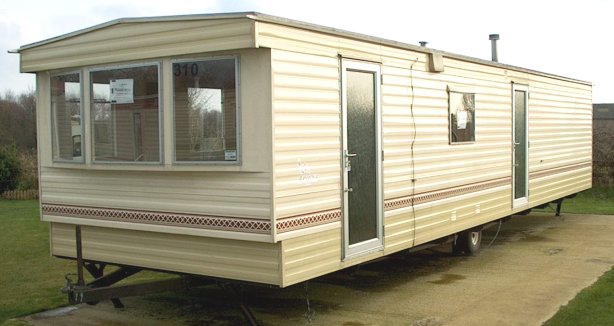
Forget everything you’ve heard about mobile homes, especially the Hollywood image of cheap trailers and seedy mobile home parks. New technology and improved materials are making mobile homes an attractive housing option.
In fact, the name mobile home may no longer be an accurate term. These homes are built in factory conditions using quality materials to meet federal and state codes. Unlike a modular home, mobile homes are built on a steel undercarriage. The wheels are used to transport the sections to the site where the home is slid off the carriage onto a foundation and permanently anchored.
The terms mobile and manufactured home are almost interchangeable, since both are transported in sections and joined at the site. The fine line difference is how much finish work is done on site. If you want to split hairs, you could say a mobile is completely finished at the factory and the sections joined at the site. A manufactured home may have siding or other finish work done on site to make it look more stick built.

Precut or Kit Homes


As the name suggests, a kit home is just that. All the components of the home are precut at the factory and shipped to the site ready to build. It’s kind of like a model airplane or car. All you have to do is put it together, and it’ll look like the picture on the box. Many log, timber frame, and specialty homes come in kit form because of the specialized materials and hardware needed. And you can build the house or hire the dealer’s crew to put it all together. You can buy a precut or kit home in just about any size or style, from your plans or theirs. You can choose the quality and upgrades you want and can afford. You can also choose how complete you want the kit, from the structure only to a complete house with nails included and ready to build. For the do-it-yourselfer with some spare time, this can be a ticket to the most house for the least money. The biggest advantages of kit homes are that you get everything you need precut and ready to go on site. There’s no waste unless you make a mistake. Depending on the area, you should be able to get the lumber and components cheaper than if you went to the nearest Home Depot.

To see how much you would save, get a lumber list from the dealer on a home plan you’re interested in and price it at your favorite lumberyard. Also, while you’re at it, compare the hardware and appliances offered with the kit to what you can get locally. Building a kit is going to be like constructing a stick-built home with you as the general contractor. You’ll need to schedule local build-ing inspections for each phase and hire subcontractors for the installs you don’t want to tackle, like plumbing, electrical, or sheet rocking. The bottom line is that you can save quite a lot of money if you’re handy and want to do most of the work yourself. In addition, having everything on site and ready to go can save you considerable time running around as well as eliminate mistakes and waste. Financing a kit home is similar to financing a stick-built home. Most lenders will go along with the financing when there’s a contractor involved. If, for example, your brother-law isn’t a contractor and you plan on going it alone, you’ll need to convince a lender you have the background and skills to do the job. Even then, you may have to jump through a few extra hoops the lender may require to limit its liability. If you’re building a log, timber frame, geodesic, or other unusual style home you may have to shop around for a lender who specializes in these types of homes. The dealer should be able to give you a list of references.

Sunday, February 22, 2009

Panel Homes


Panel homes, like modular homes, come in a wide variety of styles, sizes, and plans and are built in factory conditions similar to modular homes. The biggest difference is that panel homes are shipped in panels typically 8 feet high and up to 40 feet long. Doors, windows, and wiring can be factory installed into the wall panels. The panels are shipped to the home site and connected on site. The house can be erected and enclosed in a day or two. The interior finish work is then completed, and the home is ready to move into within a week or so. The advantages of panelized homes are similar to modular homes. Quality control is usually high because the homes are built in a con-trolled environment, and they meet or exceed federal and state build-ing codes.
You can also order the kit and finish the interior yourself. If you or Uncle Joe is a finish carpenter, you can save some bucks and time by going this route. Otherwise, you can have factory site crews com-plete the interior as part of the package.
Panel homes come in many varieties from a bare bones structure for the do-it-yourselfer to a complete package with everything included to finish the home.
The main advantages of panel homes are:
  • The structure can be up and weather tight in a day or two.
  • You can get a package that allows you to do as much work as you want to take on.
  • In areas where contractors or good subcontractors are hard to find, panel homes can give you a quality home for less money and a lot less construction time than a stick-built one.
Panel homes are built to federal and state building codes, so they qualify for FHA/VA and conventional 30-year financing.

Modular Homes


Sometimes called sectional houses, they are almost completely built in the factory.With construction done on an assembly line in a controlled environment, completion times are fast and quality control is high. Each step of the process is inspected, and the final sections are tagged certifying that the home complies with all state and federal building codes. They are a far cry from the double-wide trailers most homebuy-ers think of when modular homes are mentioned.Unlike mobile and manufactured homes, modular homes do not have a permanent steel undercarriage. As the home sections come off the assembly line, they are loaded onto carriers for a ride to the home site. Because of federal and/or state highway ‘‘wide-load’’ size restrictions, sections will typically be 12 or 14 feet wide and up to 60 feet in length.
At the site a crane lifts the sections onto the foundation, where they’re connected and permanently anchored. Utilities are connected, and the home is usually ready to move into within a week or two. This is a big plus when you consider the months that would be needed to stick build the same size house. It’s a big advantage knowing up front exactly how much the home will cost, when it’ll be done, and when it’ll be delivered.
Home style options are limited only by your imagination. Several sections can be stacked to create a Cape Cod, modern two-story, multi-level, or connected horizontally for an L-shaped ranch style home. There are even condominium projects and duplexes made from modular sections.
Most manufacturers have design departments that can help you customize a floor plan to fit your dream. Popular options are vaulted ceilings, upgraded kitchen cabinets, countertops, and steeper roof pitches.

The Different Kinds of Manufactured Homes


There are basically four types of manufactured houses: modular, panel, precut or kit, and mobile homes. The first three vary by how much of the home is done at the factory and how much site work is needed. Mobile homes are typically completely finished at the factory and shipped to the site in two or more sections. The sections are joined and anchored permanently on a concrete foundation.
Manufactured homes are built to a federal building code called the Manufactured Home Construction and Safety Standards (HUD code) and will display a red certification label on each section. While this is a federal building code, each state has its own building code that usually follows the Uniform Building Code (UBC) or the newer International Building Code (IBC). These local building codes can exceed the federal code.

Tuesday, January 27, 2009

Buying a Manufactured, Modular, or Mobile Home

Many homebuyers have the attitude that if it’s not stick built, they’re not getting a good house. That may have been true once, but with current materials and building techniques, you can get a manufactured or modular home that rivals or even surpasses stick-built construction. And you may not even be able to tell the difference once the house is set up and the landscaping in place.
Manufactured house styles and amenities have also come a long way in the past few years. You can create your dream home in a twostory, rambler, or contemporary style with customized floor plans, exterior, and colors.
According to Manufactured Homes: The Market Facts 2002 Report put out by Foremost Insurance Group, 88 percent of the manufactured homeowners surveyed said they were very or somewhat satisfied with manufactured home living. Additionally, 57 percent said they always plan to live in their current manufactured home. That’s not very good news for the resale market!
Manufactured and modular homes are built in sections under controlled conditions at the plant, then shipped to the site and assembled. This can give you better quality control and lower labor costs that translate into serious savings compared to a stick-built home. Typically, you can plan on saving about $25 or more per square foot when you go with a manufactured or modular home. On a 1,300 square foot ranch, for instance, the savings would be about $32,500 less than a comparable on-site-built home.
In rural or remote areas, where it’s difficult to find good contractors and subcontractors, a modular or manufactured home can be the best way to get the home you want with all the amenities. Plus, these homes meet all state and federal building codes and can be financed with FHA, VA, or conventional 30-year loan programs. However, like any other housing option there are pluses, minuses, and pitfalls to look out for that can cost you big time. This chapter shows you how to avoid those pitfalls and get the best deal when you buy a manufactured, modular, or mobile home.

Negotiating Tips


Many people hesitate to have garage sales because they aren’t comfortable dealing with shoppers or they lack confidence in their negotiating ability. The first step in overcoming these doubts is to realize that it’s not a matter of win or lose. You want to sell and the buyer wants to buy. It’s like a friendly chat over coffee. You bat the price back and forth in a friendly way until you both agree and it’s a done deal. True, 95 percent of garage sale shoppers will want to talk you down. They’re bargain hunters, and that’s why they’re there, to get the best deal they can. You know that, so you anticipate and plan for it. One technique is to price your goods a little high so you can come down. For example, if you have a lamp that you feel will sell for $10, price it at $15 so that the buyer will feel she got a bargain by talking you down. If you reach an impasse, offer to split the difference. She offers $8, you counter with $12, and then you offer to split the difference at $10. Many shoppers will go along with that. The keys to remember are: Keep it friendly, don’t get too serious, and don’t forget it’s not a win-lose contest. That way, you’ll have a lot of profitable fun.

Preparing Your Stuff for Sale


It’s a good idea to make your stuff look as good as possible. Clean, repair, and polish everything so that it looks its best. First impressions often make the difference between a sale or a reject. Also make the tables as neat and attractive as possible. This often means constant effort to keep them that way, but it’s worth it. A well-organized site gives shoppers the confidence to look a little longer and buy more.

How to Set Up the Sales Site


A day or two before the sale, price tag everything so there’s no question what the prices are. Use tags or masking tape with the price written on with a black marker. A good shortcut is to put $1 items on one table, $2 items on another table, and so on.
Next, spread the goods out as much as possible. Make it easy for shoppers to walk around tables and see what you’ve got. Put the best goods in front so that drive-bys can see this is a sale worth stopping at.
Make sure clothes are clean, pressed, and on hangers. If you have a lot of kids’ clothes, bag and label several same-size items for $x a bag. Have a table up front with tools, camping gear, and fishing stuff to attract the male drive-by. Likewise, package a few toys in plastic bags to sell to the kids for 10–25 cents to keep them happy and the parents around longer.
If you have appliances, run an extension cord to a table so buyers can make sure everything works before buying. Also important is to get a supply of small bills and change, since garage sales are a cash business. Have at least 20 $1 bills, 5 $5 bills, 5 $10 bills, and 2 $20 bills. For change, get a roll of quarters, dimes, and nickels. No credit cards unless you’re set up for it and can process the transaction on the spot—and absolutely no checks—no exceptions. Finally, make sure you have enough parking. Let the neighbors know what’s happening and thank them for being cooperative afterward. Good will is always important.

Sunday, January 11, 2009

Directional Signs Are a Must


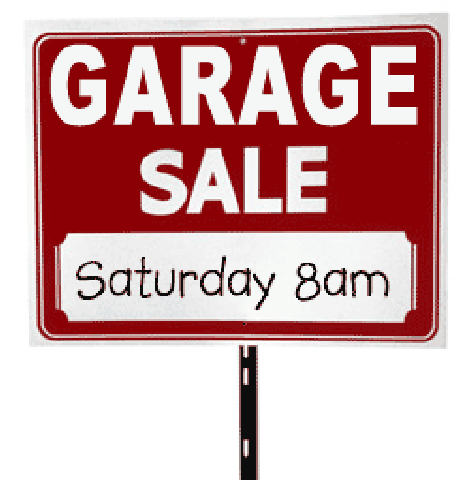
Another important tool for bringing in buyers is the directional sign, the more the better. These signs can be simple, with the words ‘‘Garage Sale’’ and an arrow. Many home centers sell these signs with wire frames that stick into the ground.
Put signs at all intersections within a two-block radius and roads that feed into your area. Attaching balloons or flags will make them even more visible. Realtors often use balloons tied to their open house signs to add to their visibility, and it works. Printing the garage sale information on brightly colored index cards and sticking them around the area on bulletin boards or wherever you can also help draw attention to your sale. You can also buy strings of brightly colored plastic flags in 50–100 ft. lengths that will add considerably to the visibility of your site.

How to Effectively Write Ads and Flyers


The bigger the sale, the more stuff shoppers have to look at, so size is a dominant feature you’ll want to include. Phrases such as neighborhood, 15-house, multiple house, area, and other words that convey how big the sale is will catch attention. Next draw in the reader by giving a few tantalizing examples of demand items for your area. List some examples such as baby clothes, patio furniture, specific appliances, and furniture.
Also important is clear, precise directions on how to get there. Make liberal use of landmarks in your instructions, such as, ‘‘turn left at the Longmont Burger King’’ or ‘‘one block south of Middleville Safeway.’’ Also have the date and times, but no phone number. You want them to come by, not call you.

One particular ad that worked almost too well was:
Moving/Estate Sale
Nothing thrown away in 30 years
Furniture, appliances, books, tools
Kitchenware, freezer, you name it.
Everything must go including house
Sale Friday & Saturday 7 a.m. to 3 p.m.

The next morning at 7 a.m. the line was long and the people were waiting impatiently. The sales were frantic all morning and into the late afternoon, well past the advertised end.
What made this ad work so well? The words estate or moving sales are always powerful. The fact that everything was up for sale including the house was a compelling draw. And possibly, the mental image of a house full of 30 years worth of collected stuff for sale stirred bargain hunters into a feeding frenzy.
A couple of days later the house—nearly empty by now—also sold because of the publicity and activity generated by the garage sale.

How to Advertise Your Garage Sale


The keys to a great garage sale are timing and advertising. To attract the most people, you need to time it so that the most people possible will come. A warm sunny day is your first choice. If you live in Seattle, that may not be possible, so you may want to consider using your garage or renting a tent to keep everything dry. The next step is to determine when most people in your area get paid. If it’s the first and fifteenth, schedule the sale as close to those dates as possible. You don’t want to have your sale around a holiday weekend. If something is happening, that will siphon off potential buyers.
The best days are Friday, Saturday, and Sunday. Friday is a good day to start because you’ll attract the buyers who work on weekends. It’s surprising how many people hit the garage sales first thing on Friday morning. Of course, Saturday and Sunday will usually attract the most shoppers. Good times to run the sale are 8 a.m. to 6 p.m. on Saturday, and to 9 a.m. to 4 p.m. on Sunday, or as long as shoppers are coming by. Check the newspapers in your area to see what times are most popular. If everyone is starting at 9 a.m., try starting at 8 or 8:30 to get them to come to your event first. Advertising your sale is critical to getting the most shoppers possible. First, determine which papers carry the most garage sale advertising and put ads in them. Don’t forget the local weeklies and the pennysaver publications with stands around the area. The bargain junkies you want to attract look at these local publications for good deals and upcoming sales. Company, religious, and other organizational newsletters are also great sources of advertising. Putting up flyers at work and around the area is effective. Start a week before the sale to get maximum effect.

How to Price Items for Sale


Pricing is the second hardest task most people have in organizing their sale. The first is deciding what to sell. But, since you’re moving, the thought of paying big bucks to move an item should temper the urge to keep it. Still, it’s important not to project your sentimental attachment into the pricing of an item.
For furniture, TVs, stereos, lamps, appliances, etc., start by estimating what an item would sell for new and then discount it 75 percent. For example, the leather sofa that you bought nine years ago for $700 would get a price sticker of $175.
Assume buyers are knowledgeable and know values. The reason they come to your garage sale is to find a bargain. Remember the bargain hunter’s psychology—if you price one item too high and a buyer spots it, she will think everything is priced too high. For old stereo systems, record players, and other obsolete electronics, price way down, say, $20–$30 or less. If you don’t sell them, there’s no other market, and they’ll end up in your give-away pile in a day or two. They may even make good loss leaders to keep buyers looking around. The longer they stay, the more they buy is the sales song of veteran garage sellers.
For example, Earl and Shirley found several cases of old but still good Ivory soap bars in a corner of their basement. They put those on a small table priced at fifteen cents a bar with a ten bars per person maximum. The purpose was to get the bargain hunters’ juices flowing in anticipation of finding other good bargains. Clothing items are usually priced in the $1.50–$5.00 range, and used shoes and sandals sell best when priced less than $3.00 a pair. Don’t sell clothing that is damaged, dirty, stained, or torn; it can hurt your credibility. Hang the best quality clothing on a rack. It’s effective to call attention on the price tag to the brand or original cost. For instance, you may write: ‘‘Eddie Bauer leather jacket $250 new, now only $45.’’ For lesser value items loose on a table, an effective pricing strategy can be $3.00 each or three for $6 or $7 to increase sales volume. Another profitable pricing gambit is to sell tools, fishing tackle, or anything you can separate as single units. For example, instead of selling a toolbox full of tools, sell each tool separately, and instead of a tackle box full of lures, sell each lure for, say, 25 or 50 cents. This can up your profit considerably on high demand items.

How to Decide What to Sell?


Since you’ve sold your home, the pressure is on to get rid of as much stuff as possible. Rule number one is that if you haven’t used it in the last year (some say six months), add it to the sales table. Why spend money moving it to your new home?
Next, don’t try to predict what people will buy, just add it to the sales pile. One woman who had never thrown away a pair of shoes in 20 years, put out four dozen pairs under pressure from her husband. She was amazed to sell three dozen pairs in two hours. The goal is to turn as much stuff into cash as you can. What you don’t sell you can donate to a charity the day before the moving van arrives.
Also, the more stuff you have to sell, the more people will come. So, you may want to get neighbors, friends, relatives, or anyone you can get to join in your garage sale. Perhaps you can get your neighborhood, cul-de-sac, or even the whole subdivision to join. Many subdivisions and even small towns have yearly garage sales/flea markets that attract thousands of bargain hunters.