Tuesday, January 27, 2009

Buying a Manufactured, Modular, or Mobile Home

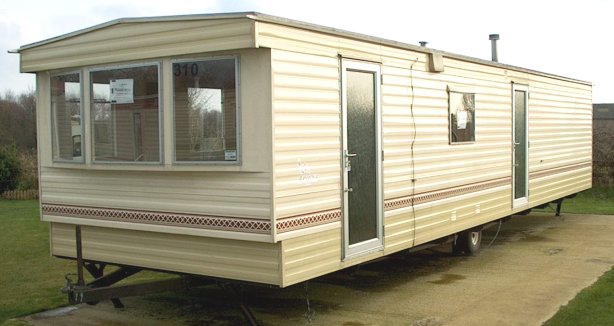
Many homebuyers have the attitude that if it’s not stick built, they’re not getting a good house. That may have been true once, but with current materials and building techniques, you can get a manufactured or modular home that rivals or even surpasses stick-built construction. And you may not even be able to tell the difference once the house is set up and the landscaping in place.
Manufactured house styles and amenities have also come a long way in the past few years. You can create your dream home in a twostory, rambler, or contemporary style with customized floor plans, exterior, and colors.
According to Manufactured Homes: The Market Facts 2002 Report put out by Foremost Insurance Group, 88 percent of the manufactured homeowners surveyed said they were very or somewhat satisfied with manufactured home living. Additionally, 57 percent said they always plan to live in their current manufactured home. That’s not very good news for the resale market!
Manufactured and modular homes are built in sections under controlled conditions at the plant, then shipped to the site and assembled. This can give you better quality control and lower labor costs that translate into serious savings compared to a stick-built home. Typically, you can plan on saving about $25 or more per square foot when you go with a manufactured or modular home. On a 1,300 square foot ranch, for instance, the savings would be about $32,500 less than a comparable on-site-built home.
In rural or remote areas, where it’s difficult to find good contractors and subcontractors, a modular or manufactured home can be the best way to get the home you want with all the amenities. Plus, these homes meet all state and federal building codes and can be financed with FHA, VA, or conventional 30-year loan programs. However, like any other housing option there are pluses, minuses, and pitfalls to look out for that can cost you big time. This chapter shows you how to avoid those pitfalls and get the best deal when you buy a manufactured, modular, or mobile home.

Negotiating Tips


Many people hesitate to have garage sales because they aren’t comfortable dealing with shoppers or they lack confidence in their negotiating ability. The first step in overcoming these doubts is to realize that it’s not a matter of win or lose. You want to sell and the buyer wants to buy. It’s like a friendly chat over coffee. You bat the price back and forth in a friendly way until you both agree and it’s a done deal. True, 95 percent of garage sale shoppers will want to talk you down. They’re bargain hunters, and that’s why they’re there, to get the best deal they can. You know that, so you anticipate and plan for it. One technique is to price your goods a little high so you can come down. For example, if you have a lamp that you feel will sell for $10, price it at $15 so that the buyer will feel she got a bargain by talking you down. If you reach an impasse, offer to split the difference. She offers $8, you counter with $12, and then you offer to split the difference at $10. Many shoppers will go along with that. The keys to remember are: Keep it friendly, don’t get too serious, and don’t forget it’s not a win-lose contest. That way, you’ll have a lot of profitable fun.

Preparing Your Stuff for Sale


It’s a good idea to make your stuff look as good as possible. Clean, repair, and polish everything so that it looks its best. First impressions often make the difference between a sale or a reject. Also make the tables as neat and attractive as possible. This often means constant effort to keep them that way, but it’s worth it. A well-organized site gives shoppers the confidence to look a little longer and buy more.

How to Set Up the Sales Site


A day or two before the sale, price tag everything so there’s no question what the prices are. Use tags or masking tape with the price written on with a black marker. A good shortcut is to put $1 items on one table, $2 items on another table, and so on.
Next, spread the goods out as much as possible. Make it easy for shoppers to walk around tables and see what you’ve got. Put the best goods in front so that drive-bys can see this is a sale worth stopping at.
Make sure clothes are clean, pressed, and on hangers. If you have a lot of kids’ clothes, bag and label several same-size items for $x a bag. Have a table up front with tools, camping gear, and fishing stuff to attract the male drive-by. Likewise, package a few toys in plastic bags to sell to the kids for 10–25 cents to keep them happy and the parents around longer.
If you have appliances, run an extension cord to a table so buyers can make sure everything works before buying. Also important is to get a supply of small bills and change, since garage sales are a cash business. Have at least 20 $1 bills, 5 $5 bills, 5 $10 bills, and 2 $20 bills. For change, get a roll of quarters, dimes, and nickels. No credit cards unless you’re set up for it and can process the transaction on the spot—and absolutely no checks—no exceptions. Finally, make sure you have enough parking. Let the neighbors know what’s happening and thank them for being cooperative afterward. Good will is always important.

Sunday, January 11, 2009

Directional Signs Are a Must


Another important tool for bringing in buyers is the directional sign, the more the better. These signs can be simple, with the words ‘‘Garage Sale’’ and an arrow. Many home centers sell these signs with wire frames that stick into the ground.
Put signs at all intersections within a two-block radius and roads that feed into your area. Attaching balloons or flags will make them even more visible. Realtors often use balloons tied to their open house signs to add to their visibility, and it works. Printing the garage sale information on brightly colored index cards and sticking them around the area on bulletin boards or wherever you can also help draw attention to your sale. You can also buy strings of brightly colored plastic flags in 50–100 ft. lengths that will add considerably to the visibility of your site.

How to Effectively Write Ads and Flyers


The bigger the sale, the more stuff shoppers have to look at, so size is a dominant feature you’ll want to include. Phrases such as neighborhood, 15-house, multiple house, area, and other words that convey how big the sale is will catch attention. Next draw in the reader by giving a few tantalizing examples of demand items for your area. List some examples such as baby clothes, patio furniture, specific appliances, and furniture.
Also important is clear, precise directions on how to get there. Make liberal use of landmarks in your instructions, such as, ‘‘turn left at the Longmont Burger King’’ or ‘‘one block south of Middleville Safeway.’’ Also have the date and times, but no phone number. You want them to come by, not call you.

One particular ad that worked almost too well was:
Moving/Estate Sale
Nothing thrown away in 30 years
Furniture, appliances, books, tools
Kitchenware, freezer, you name it.
Everything must go including house
Sale Friday & Saturday 7 a.m. to 3 p.m.

The next morning at 7 a.m. the line was long and the people were waiting impatiently. The sales were frantic all morning and into the late afternoon, well past the advertised end.
What made this ad work so well? The words estate or moving sales are always powerful. The fact that everything was up for sale including the house was a compelling draw. And possibly, the mental image of a house full of 30 years worth of collected stuff for sale stirred bargain hunters into a feeding frenzy.
A couple of days later the house—nearly empty by now—also sold because of the publicity and activity generated by the garage sale.

How to Advertise Your Garage Sale


The keys to a great garage sale are timing and advertising. To attract the most people, you need to time it so that the most people possible will come. A warm sunny day is your first choice. If you live in Seattle, that may not be possible, so you may want to consider using your garage or renting a tent to keep everything dry. The next step is to determine when most people in your area get paid. If it’s the first and fifteenth, schedule the sale as close to those dates as possible. You don’t want to have your sale around a holiday weekend. If something is happening, that will siphon off potential buyers.
The best days are Friday, Saturday, and Sunday. Friday is a good day to start because you’ll attract the buyers who work on weekends. It’s surprising how many people hit the garage sales first thing on Friday morning. Of course, Saturday and Sunday will usually attract the most shoppers. Good times to run the sale are 8 a.m. to 6 p.m. on Saturday, and to 9 a.m. to 4 p.m. on Sunday, or as long as shoppers are coming by. Check the newspapers in your area to see what times are most popular. If everyone is starting at 9 a.m., try starting at 8 or 8:30 to get them to come to your event first. Advertising your sale is critical to getting the most shoppers possible. First, determine which papers carry the most garage sale advertising and put ads in them. Don’t forget the local weeklies and the pennysaver publications with stands around the area. The bargain junkies you want to attract look at these local publications for good deals and upcoming sales. Company, religious, and other organizational newsletters are also great sources of advertising. Putting up flyers at work and around the area is effective. Start a week before the sale to get maximum effect.

How to Price Items for Sale


Pricing is the second hardest task most people have in organizing their sale. The first is deciding what to sell. But, since you’re moving, the thought of paying big bucks to move an item should temper the urge to keep it. Still, it’s important not to project your sentimental attachment into the pricing of an item.
For furniture, TVs, stereos, lamps, appliances, etc., start by estimating what an item would sell for new and then discount it 75 percent. For example, the leather sofa that you bought nine years ago for $700 would get a price sticker of $175.
Assume buyers are knowledgeable and know values. The reason they come to your garage sale is to find a bargain. Remember the bargain hunter’s psychology—if you price one item too high and a buyer spots it, she will think everything is priced too high. For old stereo systems, record players, and other obsolete electronics, price way down, say, $20–$30 or less. If you don’t sell them, there’s no other market, and they’ll end up in your give-away pile in a day or two. They may even make good loss leaders to keep buyers looking around. The longer they stay, the more they buy is the sales song of veteran garage sellers.
For example, Earl and Shirley found several cases of old but still good Ivory soap bars in a corner of their basement. They put those on a small table priced at fifteen cents a bar with a ten bars per person maximum. The purpose was to get the bargain hunters’ juices flowing in anticipation of finding other good bargains. Clothing items are usually priced in the $1.50–$5.00 range, and used shoes and sandals sell best when priced less than $3.00 a pair. Don’t sell clothing that is damaged, dirty, stained, or torn; it can hurt your credibility. Hang the best quality clothing on a rack. It’s effective to call attention on the price tag to the brand or original cost. For instance, you may write: ‘‘Eddie Bauer leather jacket $250 new, now only $45.’’ For lesser value items loose on a table, an effective pricing strategy can be $3.00 each or three for $6 or $7 to increase sales volume. Another profitable pricing gambit is to sell tools, fishing tackle, or anything you can separate as single units. For example, instead of selling a toolbox full of tools, sell each tool separately, and instead of a tackle box full of lures, sell each lure for, say, 25 or 50 cents. This can up your profit considerably on high demand items.

How to Decide What to Sell?


Since you’ve sold your home, the pressure is on to get rid of as much stuff as possible. Rule number one is that if you haven’t used it in the last year (some say six months), add it to the sales table. Why spend money moving it to your new home?
Next, don’t try to predict what people will buy, just add it to the sales pile. One woman who had never thrown away a pair of shoes in 20 years, put out four dozen pairs under pressure from her husband. She was amazed to sell three dozen pairs in two hours. The goal is to turn as much stuff into cash as you can. What you don’t sell you can donate to a charity the day before the moving van arrives.
Also, the more stuff you have to sell, the more people will come. So, you may want to get neighbors, friends, relatives, or anyone you can get to join in your garage sale. Perhaps you can get your neighborhood, cul-de-sac, or even the whole subdivision to join. Many subdivisions and even small towns have yearly garage sales/flea markets that attract thousands of bargain hunters.