Friday, November 28, 2008

What Factors You Can Control


Actually, the single best thing you can do to sell your home for the most money is when you buy it. At that time you lock in location, home style, and amenities. If you’ve chosen well, taken good care of your home, and tastefully decorated it, then you’ll get top dollar for your area.
When you look at the stark reality of home buying, you’ll find that buying a bargain house in a not-so-good area can end up biting you when you sell.
Homes buy and sell every day, regardless of a buyer’s or seller’s market. The best maintained homes in good areas always sell quickly for top dollar. You might compare home sales to a pyramid. In a hot seller’s market, the top 30 percent go quickly. As you go down the pyramid, the other 70 percent sells, but time on the market grows the further down you go. If the seller’s market persists, even properties on the bottom sell because there’s nothing else to buy. The San Francisco real estate market is a classic example.
The top 10 percent of the pyramid is almost immune to the buyer-seller market cycle. These are the homes buyers look at and exclaim, ‘‘This is it!’’ Emotions take over and price becomes secondary. Not all are high-end homes; they’re found in all price ranges. But, they’re the best within their price range, and that’s where you want to position your home.
For example, a home was put up for sale during a buyer’s market when homes were averaging 70 days on the market. It was a 40-year old frame cottage, but it had been upgraded and was priced in the beginning homebuyer range. The owners had decorated the home in coordinating colors that tied all the rooms together. The house’s exterior and detached double garage had matching vinyl siding. A new roof, along with a meticulously maintained yard, gave the home great curb appeal.
The home was priced about $8,000 over comparable homes that had sold recently. But, from the moment the sign went up, calls poured in followed by a full price offer a few days later. The buyers didn’t question the price; they felt lucky to have found their dream home in an area they wanted.
So what set this home apart from the competition? Obviously, it wasn’t price, although, many sign callers were looking in a price range of $15,000–$20,000 less. This is normal, because hope springs eternal in the minds of bargain hunters. They have to find out—they have to call.
The offers you get and the price you end up going with are dependant on the type of buyers you attract. If you attract mainly investors and bargain hunters, it’s going to be painful. If you attract serious home buyers who are looking for their dream home and buy on emotion, you’re going to get good offers.
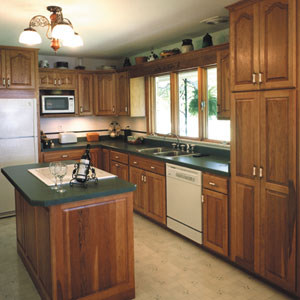
What set this home apart was, first, the area. It sits on a dead-end street of well-maintained homes. Second, the decorating was well thought out. Kitchen cabinets were refinished, and walls were freshly painted with wallpaper trim and molding that matched the cabinets. New vinyl floors and countertops in coordinating colors made the kitchen an inviting place to be.

Positioning Your Home to Get the Most Money


Buyers will navigate three homebuying rapids before they see your home. The first is location. The better the location, the more buyers will be attracted to look in that area. Second is price. The more homebuyers in the market who can afford your home, the better. Third, the more mainstream your home is in size, style, and floor plan the bigger pool of buyers you’ll have to market to. Maybe that’s why vanilla is the biggest selling ice cream flavor. A great book on this is Martha Webb’s Dress Your House for Success (ISBN 0-517-88844-0). It’s a must read on presenting your house at its best.

Bathrooms Are Important, Too


Bathrooms on the ‘‘Cost vs. Value Report’’ came in second as the most important remodeling project. If your bathroom is 15 plus years old, you may have to replace some fixtures. If those are still in good condition, then painting, recaulking, and cleaning the grout and tile may be all that’s needed. If it’s a small bathroom and the sink/cabinet is old, consider replacing with a pedestal sink. It will make the bathroom look bigger and less cluttered. Also, look at the lighting, which can also transform a bathroom’s look.
Getting your home in shape to sell does take a lot of effort and some cost. But you really don’t have a choice if you want to get the most money. Sellers who dump a home on the market are likely to lose thousands of dollars more than the money they would have spent getting it in top showing condition.

The Kitchen Is Next in Importance


Every year Remodeling magazine publishes a ‘‘Cost vs. Value Report’’ that looks at the cost of different remodeling projects and what return you could expect if you were to sell. Obviously, the return varies widely with the area, but the kitchen is the most important project according to the report’s data.
You don’t have to spend a fortune to make your kitchen look good; here are five suggestions on how to do that:
  1. If your floor is old and the vinyl is cracked, you’ll need to replace it. A mid-grade vinyl is a good way to go make your kitchen look new. Don’t try to give a flooring allowance so that the buyer can take care of it; that can cost you a sale. It’s easier for a buyer to simply go to the next home on the list than worry about installing a new floor.
  2. Kitchen cabinets that are dated or look beat up can be brought back to life economically with a new facelift. There are companies that specialize in kitchen cabinet refacing that are worth looking into. Check the Yellow Pages under Kitchen Cabinets. As usual in working with contractors, get three bids. Another option is to remove as much finish as possible with a chemical remover, then sand the cabinets smooth with 220 or finer sandpaper. Using a good-quality gloss white enamel, apply as many coats as needed for a high gloss look.
  3. If the countertops are dated or in bad condition, replace them with a new laminate countertop or whatever homes in your price range have most commonly. In other words, if homes in your price range have Corian or granite, you don’t want to put in anything less.
  4. Appliances should all be in working order. Here again, if they’re dated, you’ll need to replace the range and/or dishwasher. It’s important to have the appliance colors match. If an appliance is in good condition but in a different color, you can have it painted for a fraction of what it costs to replace it. Look in the Yellow Pages under Appliances—Refinishing.
  5. Lighting can make or break an otherwise great kitchen. If needed, upgrade or add lighting fixtures. The small halogen under cabinet lights can give a drab kitchen a designer look. Check out the options at a home center; there are enough choices to whet any designer appetite.

How to Make the Home Interior Attractive?


When buyers are impressed with your home’s curb appeal, they’ll walk through your front door with a growing feeling of ‘‘I could enjoy living here.’’
The next thing buyers take in is the paint job. Bright yellow walls with a salmon accent may look good in the House Beautiful magazine, but this won’t sell your home. Giving your home a fresh coat of off white low luster paint will keep the ball rolling. No one can fault you for going white. Even wannabe decorators will look at a white wall with anticipation.
Sellers on one home painted all the rooms in the house a different bright color. The effect was bizarre, but they refused to repaint the home. They felt that a buyer with their tastes would come along and buy it. Unfortunately, such a buyer didn’t come along. After the house sat vacant for months on the market, with the owners making mortgage payments, they did get an offer. The sellers ended up selling for what they owed, losing not only equity but also about $7,000 in mortgage payments while the house was empty.
By the way, when you take down the pictures, knick-knacks, and three generations of family photos to paint, leave them down and box them up. You’re going to move anyway, and you don’t want to distract the buyers from imagining their stuff on the clean white walls. Actually, anything that prevents buyers from imagining themselves owning the house should go into storage. Most common objects are trophies, hobby display cases, awards, and antiques.

Wednesday, November 12, 2008

Five Ways to Create Great Curb Appeal


  1. Start with the overall picture. How’s the lawn? Does it need fertilizer and water to make it green and inviting? Planting flowers is also a great way to add color and appeal.
  2. Can you see your house? Trees should frame the house, not block its view. If possible, clear out trees and shrubs that block the front view and detract from it. Of course, if you have 100-year-old sycamores, cutting them down may not be a good idea. Older trees lining the streets make some neighborhoods appealing. Foundation shrubs should be trimmed down to no more than 3–4 feet high. A big no-no is letting shrubs grow so tall that they block front windows.
  3. Follow the steps a buyer would take to your front door. How are the walkway, the porch, or steps and any railings? This is critical—the buyer’s mind is recording all this with DVD clarity.
  4. The entryway is another important impression-making item. Make sure your front door is freshly painted or stained and the fixtures free of tarnish. If the front door has seen better days, replace it with a model that complements your house style. Oh, and don’t forget the porch light fixture.
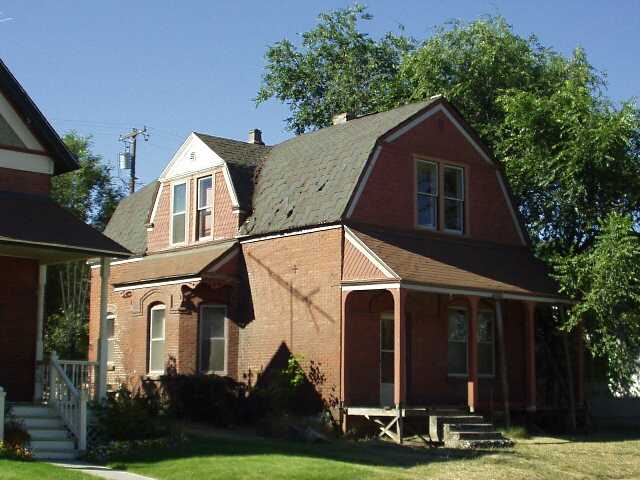
  5. The roof is an important part of your curb appeal. If your roof is 10 years plus, it’s a good idea to get a roofing inspector to look at it. Get the inspection in writing with the inspector’s contractor’s license number clearly legible. Having this inspection will show potential buyers the roof’s condition when they ask. If the roof is getting old and shingles are missing and/or curled, consider springing for a reshingle. It’s going to cost you a lot more when all you get is low offers because buyers get a fixer-upper image of your home.

Curb Appeal Brings Better Offers


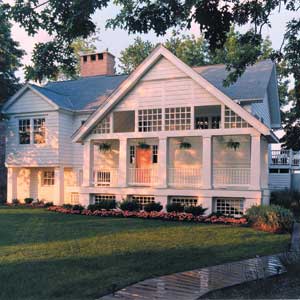
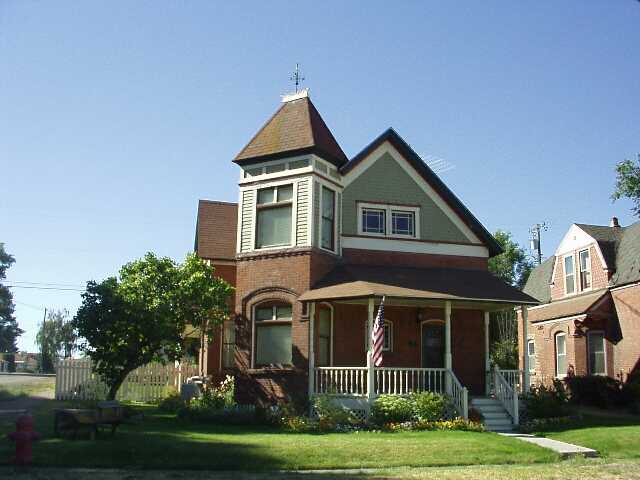
We’ve all heard that first impressions are most important, and so it is with your house. What kind of first impression will your house give buyers who drive slowly by your home? Real estate people call this curb appeal. If you have great curb appeal, the sale is half done. If you don’t, the buyers are looking around wondering what else is not up to par. And in their mind, the value takes an escalator ride down. So walk across the street from your home and pretend you’re a buyer. What do you see that detracts from good curb appeal? Take notes and/or photos.
Also, look at other homes in your area that you find attractive. Note what the owners have done and do likewise. Remember, good curb appeal will put money in your bank account.

Shaping Up Your Home to Sell for the Most Money


When most people sell their car, they clean it meticulously inside, outside,
and under the hood or send it to a detail shop. They know intuitively that you can’t sell a car that doesn’t look sharp. There’s lots of
competition out there, and buyers are discriminating. Yet, it’s amazing how many people put their home on the market with nowhere near the thought and planning they would put into selling their 1998 Honda Accord. It’s as if they decided to sell, so they ran down to the home center, bought a FOR SALE sign, and stuck in the lawn—end of process.
You can do that, and your home might sell, but it’ll cost you a few thousand dollars. Here’s a better way that will give you a bigger smile when you deposit your closing check.

Selling Your Home and Moving


Eventually, every home ends up with a for sale sign in the front yard. Sometimes it’s a planned sale and the owners anticipate making money and moving up. Other times it’s an estate sale and the heirs want to put the sale behind them as quickly as possible. Unforeseen life changes also require homes to go on the market. The homes-for-sale pot is constantly being stirred with homes coming on and going off the market. Unfortunately, too many homeowners lose money needlessly when they sell. Many times that’s because they don’t have an exit strategy when they buy. Buying a house is not a forever project. Nationally, the average family moves about every six years.
As a result of our mobility, no blog on homebuying can be complete without a section on selling. The two are often intertwined when sellers close on one home then, without leaving the conference room, close on another as buyers. So, a section on how to sell a home and get the most money becomes a must read. Since everyone who buys and sells a home must move, tips on how to find and work with a mover are included that can easily save you big bucks. To add a little frosting, a section on successful garage sales should bring in some money to help defray the moving costs.

Essential Information on 1031 exchange


The IRS requires the exchange to be in kind, and it identifies that as real estate for real estate. You can exchange a duplex for bare land, office building, warehouse, or whatever, just so long as it’s real estate. You can exchange one property for ten properties; the numbers on either side of the exchange don’t matter, just so long as the properties are not used as primary or secondary residences. From the date of closing on the sale of the relinquished property, you have 45 days to find the replacement property(ies), and 180 days to close.
You must insert a clause into all sale contracts that identify the transactions as a 1031 exchange. The IRS needs to see an easy-to-follow paper trail.
John and Angie went the exchange route when they decided they no longer wanted the demands of being a landlord. They owned a duplex that had about $80,000 equity and didn’t want to pay out a big part of their equity in taxes. Although they didn’t want to exchange it for more rental property, undeveloped land appeared to be a good way to go—low maintenance, no rent to collect, or late-night plumbing problems to fix.
Finding a buyer for their duplex was easy, and the sale closed with the proceeds going into escrow. Their realtor found a 10-acre parcel for sale that appeared to be in the path of eventual development. Since the land cost $139,000, John and Angie needed about $59,000 to make a deal. They decided to take out a 10-year, low interest equity line of credit on their home for the funds needed to complete the deal. The second leg of the 1031 exchange closed, and everyone was happy.
As a result of the exchange, a young couple starting out was able to buy a duplex they had been searching for. John and Angie didn’t have to collect rents or do maintenance on their day off anymore. Everyone won, and the tax man had to wait for another day to collect his due.
For more information on 1031 exchanges go to www.firstamex.com.

How One Couple Profited from a 1031 Exchange?

When Norm and Sandy were transferred from Utah to Georgia, the market was slow. They couldn’t sell the home they were living in, nor a smaller rental home they bought from an estate. So, they hired a rental company to manage the homes, and both rented for close to their mortgage payments. Three years later, interest rates had dropped, and the market had improved, so Norm and Sandy decided to sell the homes. Their strategy was to put the proceeds from the sales into a 1031 exchange escrow with a title company in Utah and find a rental property in Georgia. When they closed on the property where they lived, the funds would be released from escrow and used for a down payment.

The balance of the purchase price would come from a non-owner occupied mortgage. Luckily, the tenants in the smaller home wanted to buy it and were able to qualify for the mortgage payments, which were $80 less than their rent payment. The sale closed, and the $37,000 proceeds went into the title company exchange department’s escrow account. While the paperwork for the rental sale was going forward, Norm and Sandy were out looking for rentals in their area. The market was tight, and they didn’t find anything they liked until two weeks after their home in Utah had closed. (The IRS allows 45 days to identify a property and up to 180 days to close the deal). They made an offer on a two-bedroom condo in a good area for $185,000, and it was accepted. The $37,000 in escrow was used for a 20 percent down payment and the balance financed with a nonowner-occupied mortgage. The equity from one rental home in Utah was transferred to Georgia with no capital gains taxes.

Norm and Sandy’s other rental has six months to go on a lease. If the tenants can’t or don’t want to buy it, the property will go on the market and the process will be repeated. As you can see, the 1031 exchange is a great way to transfer equity from one area to another without losing to capital gains taxes. If you need to move and can’t sell your home, you can rent it until the market improves and still build equity.